
Arabic Entertainment Dubai: Acts, Prices and Booking Guide
What to book, what it costs and what actually works on the night, from a team that has staged this across the UAE for over a decade.


★★★★★We hired a band from Bella Entertainment for a work function and it was just brilliant. Great comms, great organisation and brilliant friendly performers. Recommending without hesitation.
Natasha Hatherall-Shawe, Google review
★★★★★We booked Bella Entertainment's African drummers and dancers for our corporate event, and it was an amazing experience! The 30-minute performance was energetic, engaging, and truly entertaining.
Kavya Ashok, Google review
★★★★★Organized my yacht party with hiring a sax player and DJ for my birthday. Very good timing from Bella team and excellent price quality entertainment agency in UAE.
Walter P., Google review
Rated 4.4 on Google from 25 reviews. Read all reviews
Arabic entertainment Dubai bookings typically centre on belly dancers, Al Ayala stick-dance troupes, oud or qanun players, tanoura spinners and Arabic-speaking MCs, priced roughly from AED 2,000 for a single act to AED 15,000 or more for a full folkloric ensemble with musicians. Most corporate and wedding clients combine two or three acts across a three to four hour event. Fire elements, drums and amplified sound may need a DET entertainment permit depending on the venue, and hotel venues usually require proof of insurance and a run sheet at least a week ahead.
- Why Arabic entertainment works for Dubai events
- Traditional Arabic entertainment for events: the core acts
- Arabic entertainment ideas by event type
- Emirati entertainment for events: Al Ayala, Yola and heritage touches
- Arabic entertainment activities: interactive add-ons
- Price table: AED ranges by act
- Permits, timing and the mistake that costs the most
- FAQ
Why Arabic entertainment works for Dubai events
Arabic entertainment dubai bookings sell themselves once a client has been to one good event. A belly dancer pulling guests onto the floor, a drum line building energy before a keynote, an oud player easing the mood during dinner: these are moments people photograph and remember, and they read as authentic rather than generic. In a city where half the guest list is often international, Arabic acts also do something a live band cannot: they tell guests where they are.
The other reason it works commercially is flexibility. The same act type can be dialled up or down. A duo (oud and vocal) suits a 40-person dinner. A full folkloric troupe with drums, dancers and a fire finale suits a 500-person gala at Atlantis The Palm or a product launch at Dubai World Trade Centre. The brief just needs to say the headcount and the room.
Traditional Arabic entertainment for events: the core acts
Five acts cover most briefs we get for weddings, corporate dinners and cultural launches across Dubai and Abu Dhabi.
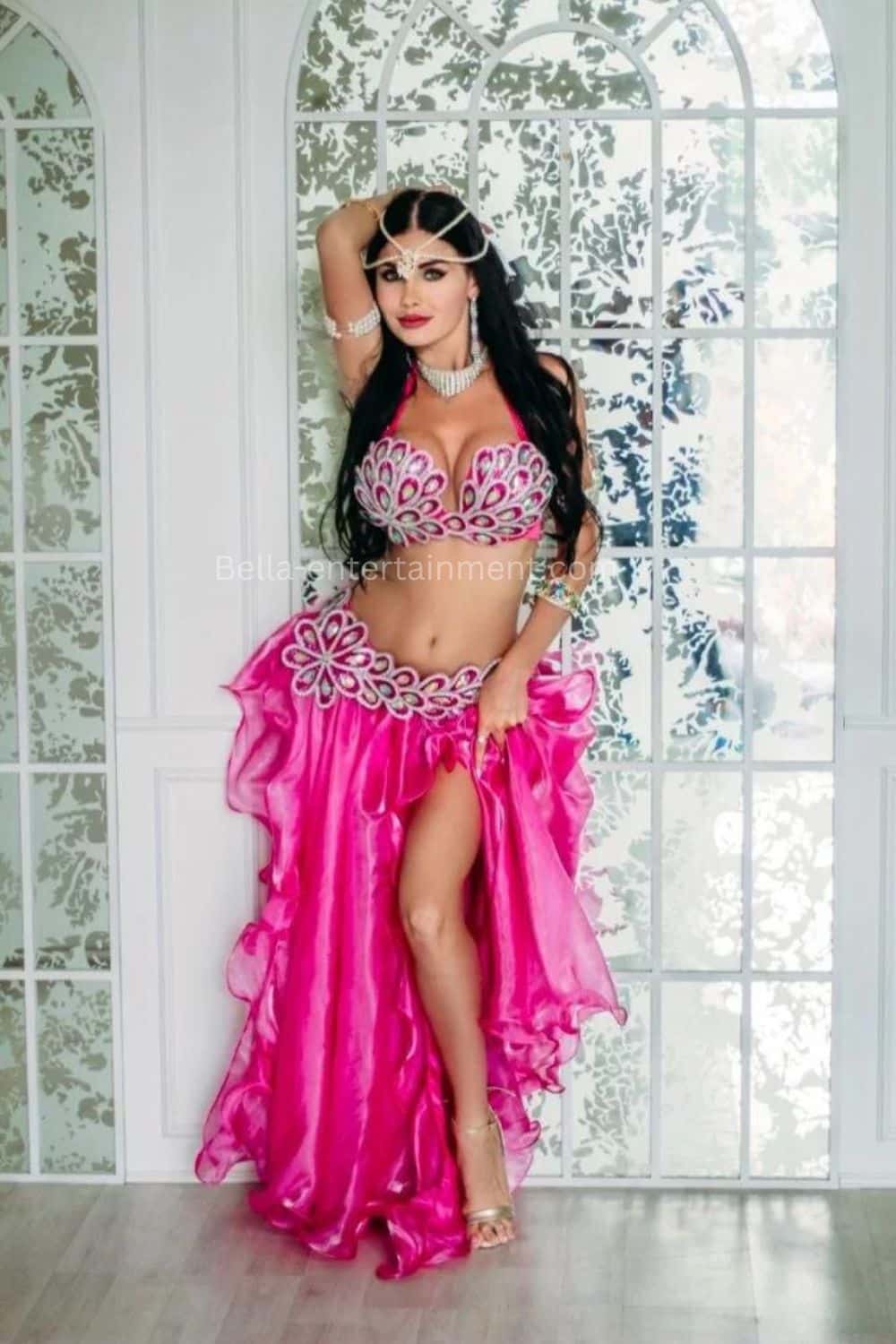
- Belly dancers. The single most requested act. A professional set runs 15 to 20 minutes, usually two costume changes, with a live drummer optional for extra impact. See our belly dancers for hire in Dubai for set lengths and costume options.
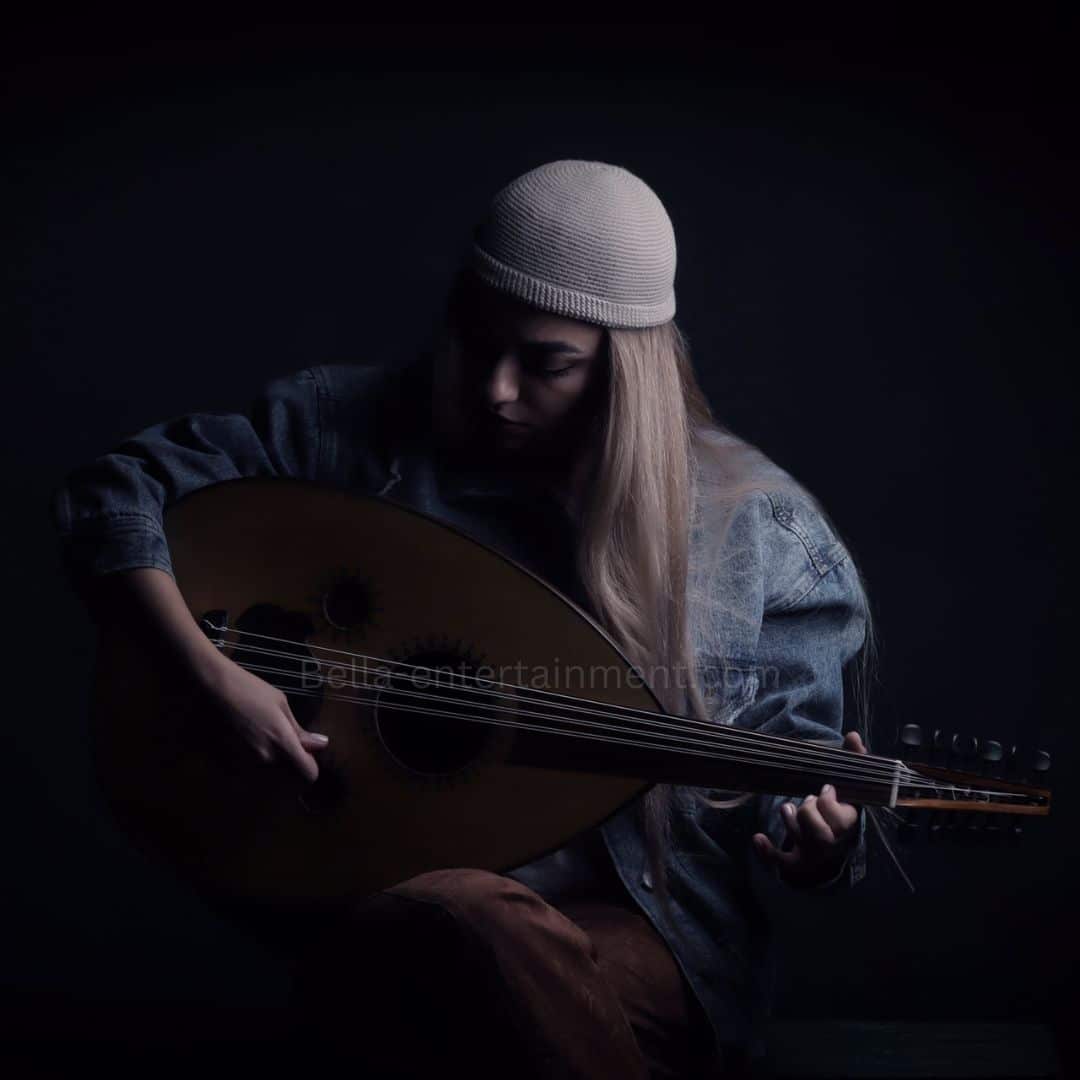
- Oud and qanun players. Solo or duo, ideal for cocktail hour and dinner service where you want atmosphere, not a stage moment. Ninety minutes of ambient sets is standard.
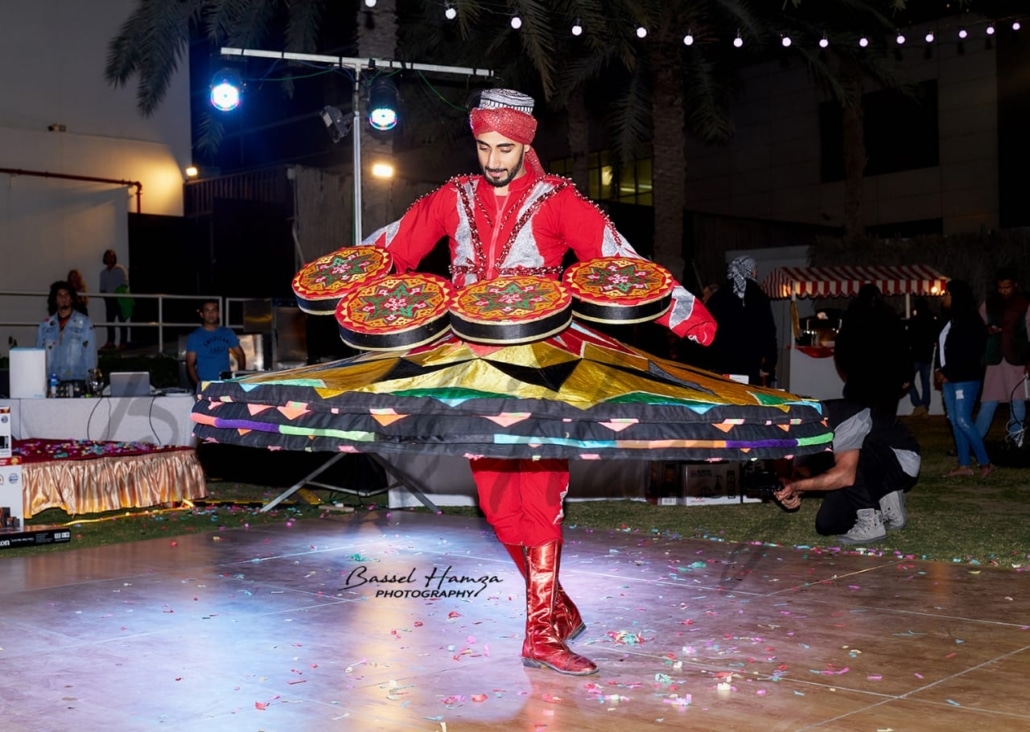
- Tanoura dancers. The whirling Sufi-style skirt performance, usually 10 to 12 minutes, works best as a standalone spectacle between courses rather than background entertainment.
- Arabic MCs and hosts. Bilingual hosts who can run a gala in Arabic and English, keep protocol correct for government or royal guests, and manage a translated run sheet.
- Traditional music ensembles. Oud, qanun, ney and percussion together, four to six musicians, for events wanting a fuller live sound than a solo player gives.
For anything involving live musicians beyond a single performer, check our live music artists for hire in Dubai page for lineup sizes and stage requirements.
Arabic entertainment ideas by event type
The right mix depends on who is in the room and how long the entertainment slot actually is.
Corporate events and product launches
Al Ayala or a drum line for guest arrival, a belly dancer or fire performer as a mid-event energiser, and a bilingual MC to keep timings tight for VIP speeches. This combination works well at Expo City Dubai and DWTC halls where you have a hard start and end time. Our corporate event entertainment guide covers run-of-show templates in more detail.
Weddings
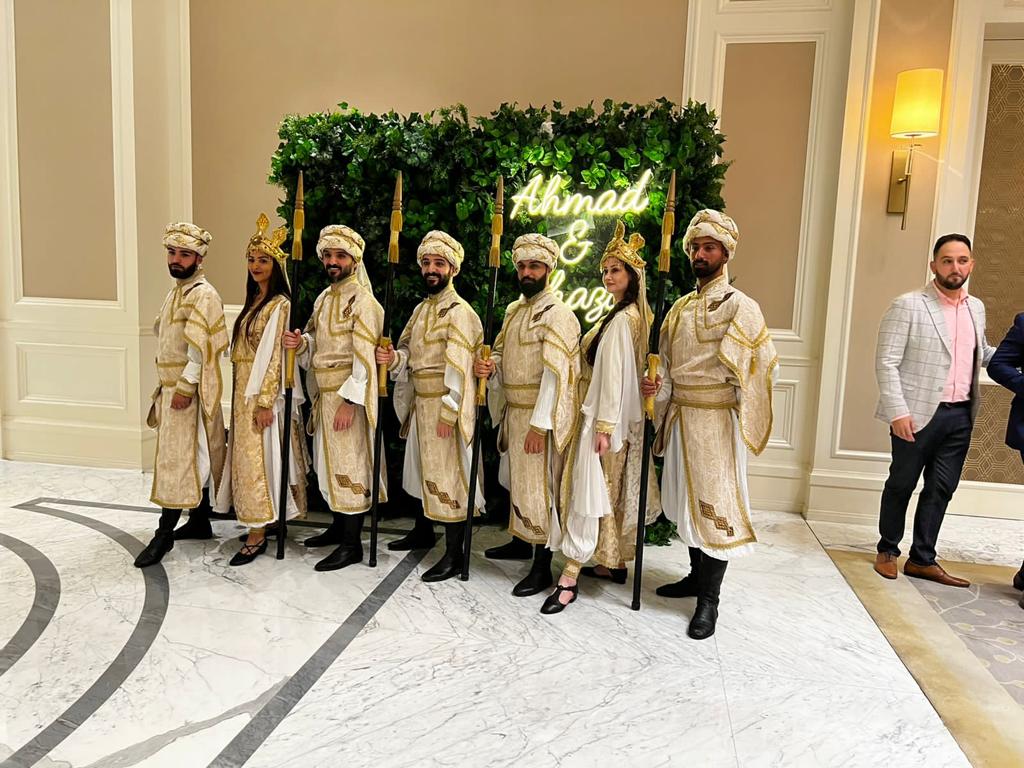
Zaffe (wedding procession) with drums and dancers for the couple's entrance, followed by a belly dancer set during dinner, then a live band or DJ for the rest of the night. Venues like Madinat Jumeirah and Address Downtown allow outdoor zaffe processions but will cap decibel levels near neighbouring rooms.
Mall activations and public events
Shorter, repeatable sets: 10 to 15 minutes on a loop through the day, usually Al Ayala, tanoura or a magician for family footfall. These need a DET activation permit separate from the venue's own trading licence.
Private and yacht parties
Space is the constraint. A solo oud player or a two-piece belly dance and drum act reads better on a yacht deck than a six-piece ensemble that cannot physically fit.
See the full event type breakdown for entertainment matched to gala dinners, weddings, launches and private celebrations.
Emirati entertainment for events: Al Ayala, Yola and heritage touches
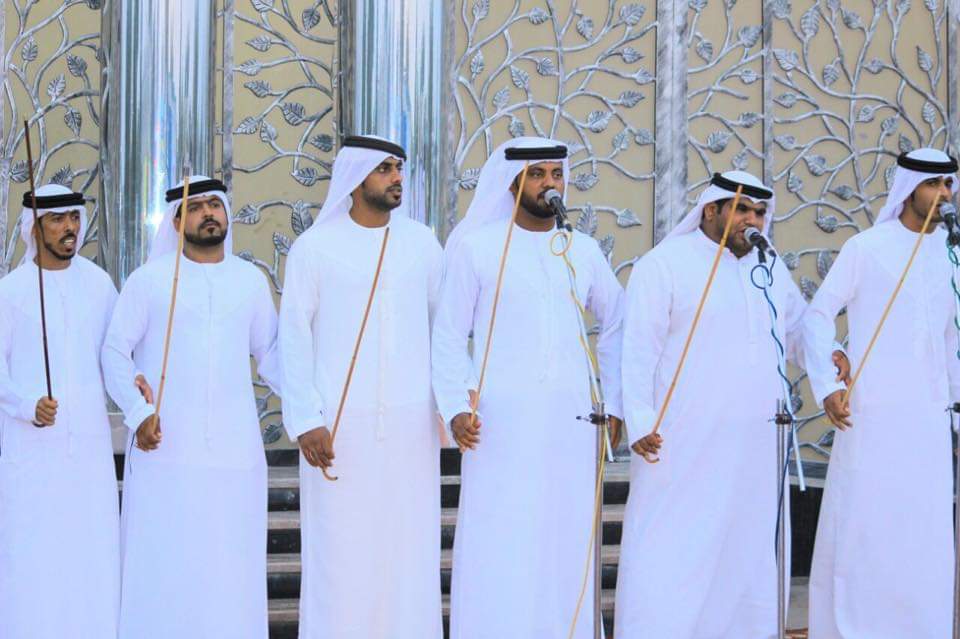
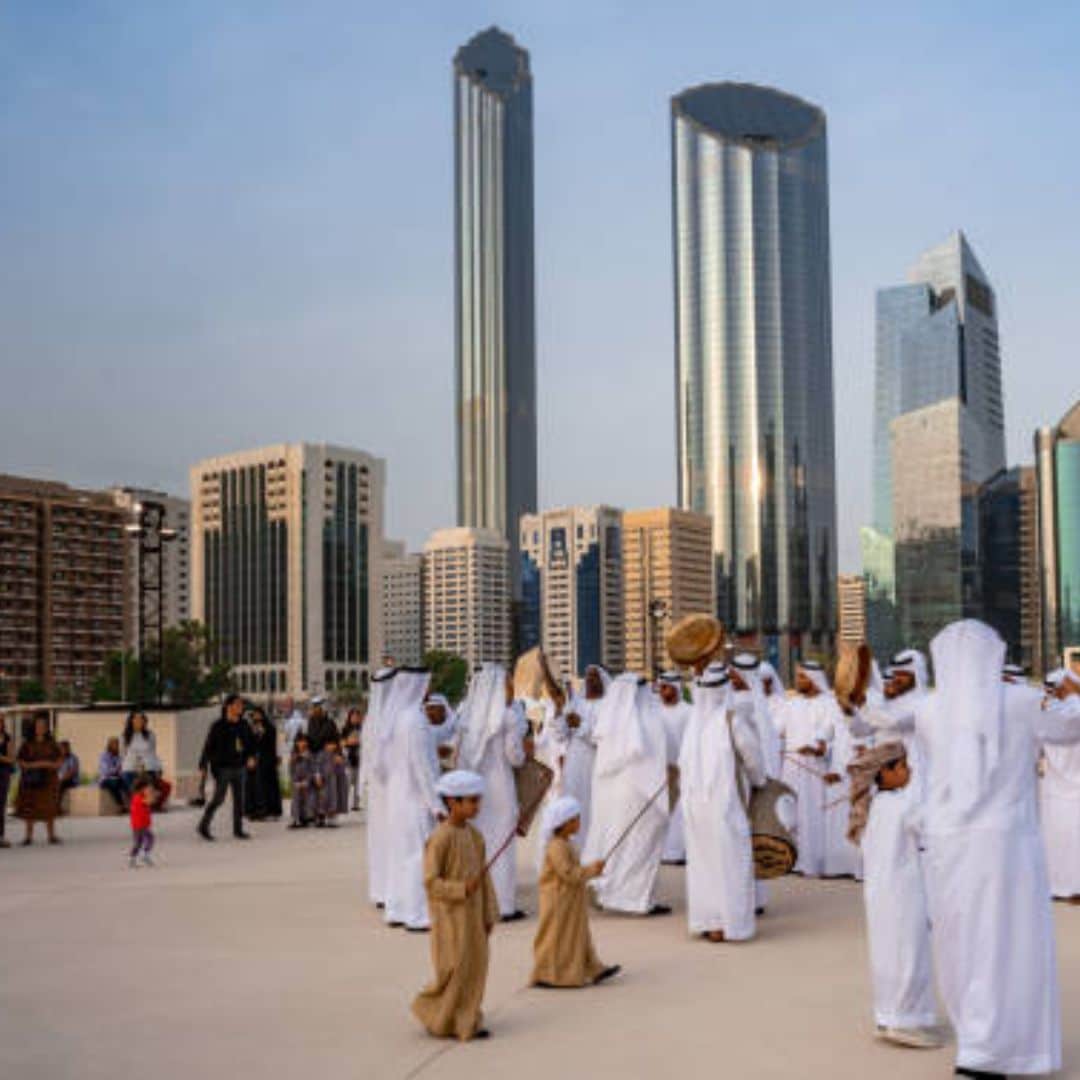
Emirati entertainment for events centres on Al Ayala, the stick dance performed by two rows of men swaying and chanting to drums, a staple at National Day events, government functions and heritage-themed weddings. A typical troupe is 10 to 20 performers plus drummers, and a set runs 10 to 15 minutes, though longer processional versions exist for arrivals.
Yola dance, a lesser-known Emirati folk style performed by women with hair-flicking movements to poetry and drumbeats, is often paired with Al Ayala to give a fuller heritage programme, particularly for cultural weeks, government hospitality events and Abu Dhabi functions at Emirates Palace or Yas Island venues.
Other heritage touches clients add: falconry displays for outdoor daytime events, Arabic coffee (gahwa) and dates served by staff in traditional dress as a welcome gesture, and a hakawati storyteller for a slower, seated segment aimed at older guests or a cultural gala with a narrative theme.
Arabic entertainment activities: interactive add-ons
Arabic entertainment activities that put guests in the moment, rather than just watching, tend to get the highest satisfaction scores on post-event feedback.
- Henna artists. Book two artists per 100 guests if you want to avoid a queue; each design takes 5 to 10 minutes.
- Arabic calligraphy. A calligrapher writing guest names is a popular favour station, budget one artist per 60 to 80 guests over a three-hour window.
- Live painting. An artist completing a large canvas over the event, often auctioned or gifted to the host afterward.
- Craft and coffee stations. Good for family days and mall activations, low cost relative to performance acts and easy to run all day.
These pair naturally with hostesses to manage flow at busy stations. Our hostess agency page covers staffing ratios for activation-heavy events.
Price table: AED ranges by act
Rates vary by season, day of week and whether the act needs its own sound system. These are typical current rates for Dubai and Abu Dhabi bookings, confirm exact pricing against your date and venue.
| Act | Typical set length | AED price range |
|---|---|---|
| Solo belly dancer | 15 to 20 min | 2,000 to 5,000 |
| Belly dancer with live drummer | 20 min | 4,000 to 7,500 |
| Oud or qanun soloist | 60 to 90 min (ambient) | 1,800 to 3,500 |
| Traditional music ensemble (4 to 6 pc) | 60 to 90 min | 6,000 to 14,000 |
| Tanoura dancer | 10 to 12 min | 2,500 to 5,000 |
| Al Ayala troupe (10 to 20 performers) | 10 to 15 min | 8,000 to 20,000+ |
| Zaffe procession (drums and dancers) | 10 to 15 min | 3,500 to 8,000 |
| Bilingual Arabic MC / host | Full event | 2,500 to 6,000 |
| Henna artist (per artist, per event) | 3 hours | 800 to 1,500 |
| Falconry display | 30 to 45 min | 3,000 to 7,000 |
Prices exclude venue fees, sound system rental where the act does not carry its own PA, and any permit costs. Multi-act packages usually work out cheaper per act than booking each separately, ask for a bundled quote if you need three or more acts on the same night.
Permits, timing and the mistake that costs the most
In Dubai, most public-facing performances (malls, hotel public areas, ticketed events) need a DET entertainment permit, formerly issued under DTCM. Private events inside a licensed hotel ballroom are usually covered by the venue's own licence, but drummers, fire elements and amplified outdoor sound often trigger a separate sign-off, particularly near residential towers. In Abu Dhabi the equivalent approval sits with DCT. Processing typically takes several working days, so submit as soon as the act list is confirmed, not the week of the event.
Book acts once your venue and rough headcount are set, ideally three to four weeks out for weddings and galas, two weeks for smaller corporate bookings. Ramadan and peak wedding season (October to April) get booked up faster, so confirm popular acts like Al Ayala troupes and belly dancers earlier than you think you need to. See our DTCM event permit cost guide for current fee bands and processing times.
The most expensive mistake
Booking a fire performance, drum-heavy Al Ayala troupe or amplified outdoor act without checking the venue's noise and fire clearance rules first. Hotels and mall management routinely reject fire elements or cut amplified sound mid-set if it was not cleared in advance, and a same-week permit rejection means paying the act's cancellation fee with no show to replace it. Always confirm permit and venue sign-off before the deposit, not after.
Frequently asked questions
What is the best Arabic entertainment for a corporate event in Dubai?
Most corporate clients combine a bilingual Arabic MC to run timings, an Al Ayala or drum line for guest arrival, and a belly dancer or short cultural performance as a mid-event energiser. This keeps the programme moving without derailing a fixed agenda, and works well at venues like DWTC and Expo City Dubai where speaking slots are tightly scheduled.
How much does a belly dancer cost in Dubai?
A solo belly dancer typically costs AED 2,000 to 5,000 for a 15 to 20 minute set, rising to AED 4,000 to 7,500 with a live drummer accompanying the performance. Rates depend on the dancer's experience, the number of costume changes and whether the venue requires the act to bring its own sound system.
Do I need a permit for Arabic entertainment in Dubai?
Private events inside a licensed hotel ballroom are usually covered by the venue's own entertainment licence. Public or ticketed events, mall activations, and anything with amplified outdoor sound or fire elements generally need a separate DET entertainment permit in Dubai, or DCT approval in Abu Dhabi. Confirm this with your venue before booking, since rules vary by location.
What is Al Ayala and when is it used?
Al Ayala is a traditional Emirati stick dance performed by rows of men swaying and chanting to drums, historically representing unity and readiness. It is commonly booked for National Day events, government functions, weddings with a heritage theme, and Abu Dhabi cultural galas. A typical troupe is 10 to 20 performers with a set running 10 to 15 minutes.
What traditional Arabic instruments are used at events in Dubai?
The oud (a pear-shaped lute) and qanun (a plucked zither) are the two most requested instruments for ambient and dinner-hour entertainment. Fuller ensembles add the ney flute and hand percussion. Solo players suit cocktail hours and intimate dinners, while a four to six piece ensemble suits larger galas wanting a richer live sound.
How far in advance should I book Arabic entertainment for a wedding?
Book three to four weeks ahead for weddings and large galas, and at least two weeks ahead for smaller corporate bookings. Popular acts, especially Al Ayala troupes and experienced belly dancers, get booked out faster during peak wedding season between October and April, and during Ramadan, so confirm early if your date falls in those windows.
Can Arabic entertainment be combined with a DJ or live band?
Yes, this is the standard format for weddings and large corporate dinners in Dubai. A common run of show is a zaffe or Al Ayala arrival, a belly dance or tanoura set during dinner service, then a live band or DJ for the remainder of the night once the formal segments are finished.
Ready to put a lineup together? Send your event date, venue and headcount to us on WhatsApp at +971 50 541 7318 and we will come back with a quote within a working day. Browse the full act type directory if you want to see everything on offer before you message us.
Book Arabic entertainment for your Dubai event
Tell us your date, venue and headcount and we will send a tailored lineup and quote within a working day.
Get a Free Quote