
Band in Arabic: Dubai Prices, Line-Ups and Booking Guide
What a band in Arabic actually costs in Dubai and Abu Dhabi, which line-up fits which occasion, and how to book one without a permit or sound problem on the night.
★★★★★We hired a band from Bella Entertainment for a work function and it was just brilliant. Great comms, great organisation and brilliant friendly performers. Recommending without hesitation.
Natasha Hatherall-Shawe, Google review
Rated 4.4 on Google from 25 reviews. Read all reviews
Published 15 October 2026 · 9 min read · Bella Entertainment
A band in Arabic for a Dubai or Abu Dhabi event typically runs AED 1,500 to 3,000 for a solo oud player, AED 3,000 to 7,000 for an oud and qanun duo, AED 7,000 to 14,000 for a takht ensemble or Khaleeji band, and AED 12,000 to 14,000 for a full pop or fusion band with vocalist and dance repertoire. Price depends on line-up size, whether a female vocalist is included, and venue. Hotels need an internal NOC, public venues need a DET permit, and Ramadan sets start only after iftar.
- What is a band in Arabic: line-ups explained
- Arabic band prices in Dubai: AED table by line-up
- Arabic entertainment beyond the band: dancers and troupes
- Repertoire by occasion: weddings, Ramadan, National Day, corporate
- Oud band and traditional Arabic band setups
- Sound, stage and technical requirements
- Permits, NOCs and Ramadan timing rules
- Booking process: lead times and what is included
What Is a Band in Arabic: Line-Ups Explained
Not every band in Arabic is the same act with a different name on the invoice. The line-up you choose changes the mood of the room more than any other single decision in the entertainment budget, so it is worth a few minutes to get it right before you send a request to agencies.
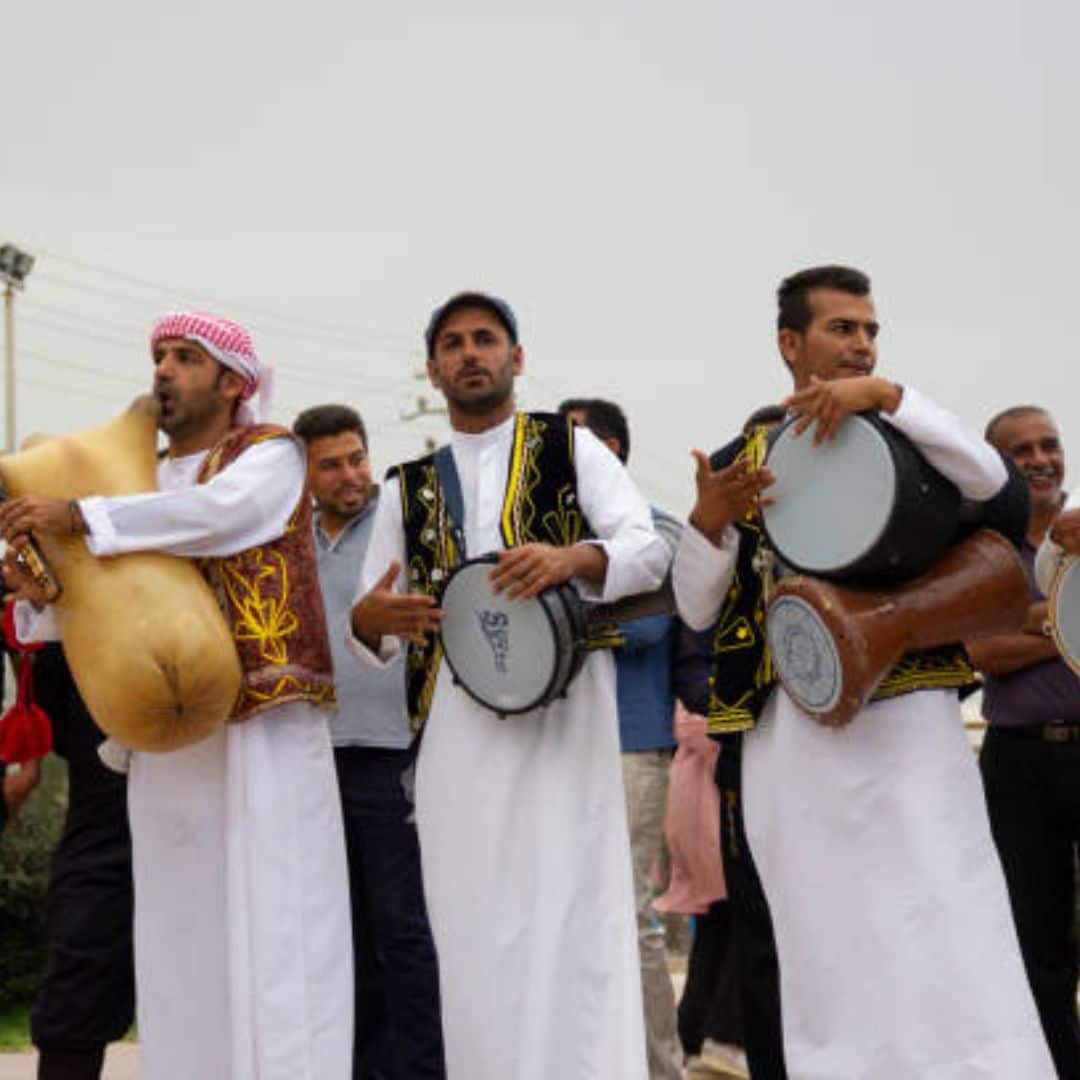
An oud and qanun duo is the quietest and most flexible option: two seated musicians, acoustic or lightly amplified, suited to a cocktail hour, a majlis, or dinner tables where guests are still talking. A takht ensemble adds a nay (reed flute), a riq or tabla, and sometimes a violin, giving you the classical Egyptian and Levantine sound heard in Umm Kulthum and Fairuz repertoire. This is the step up for a formal gala dinner where you want music heard but not competing with conversation.
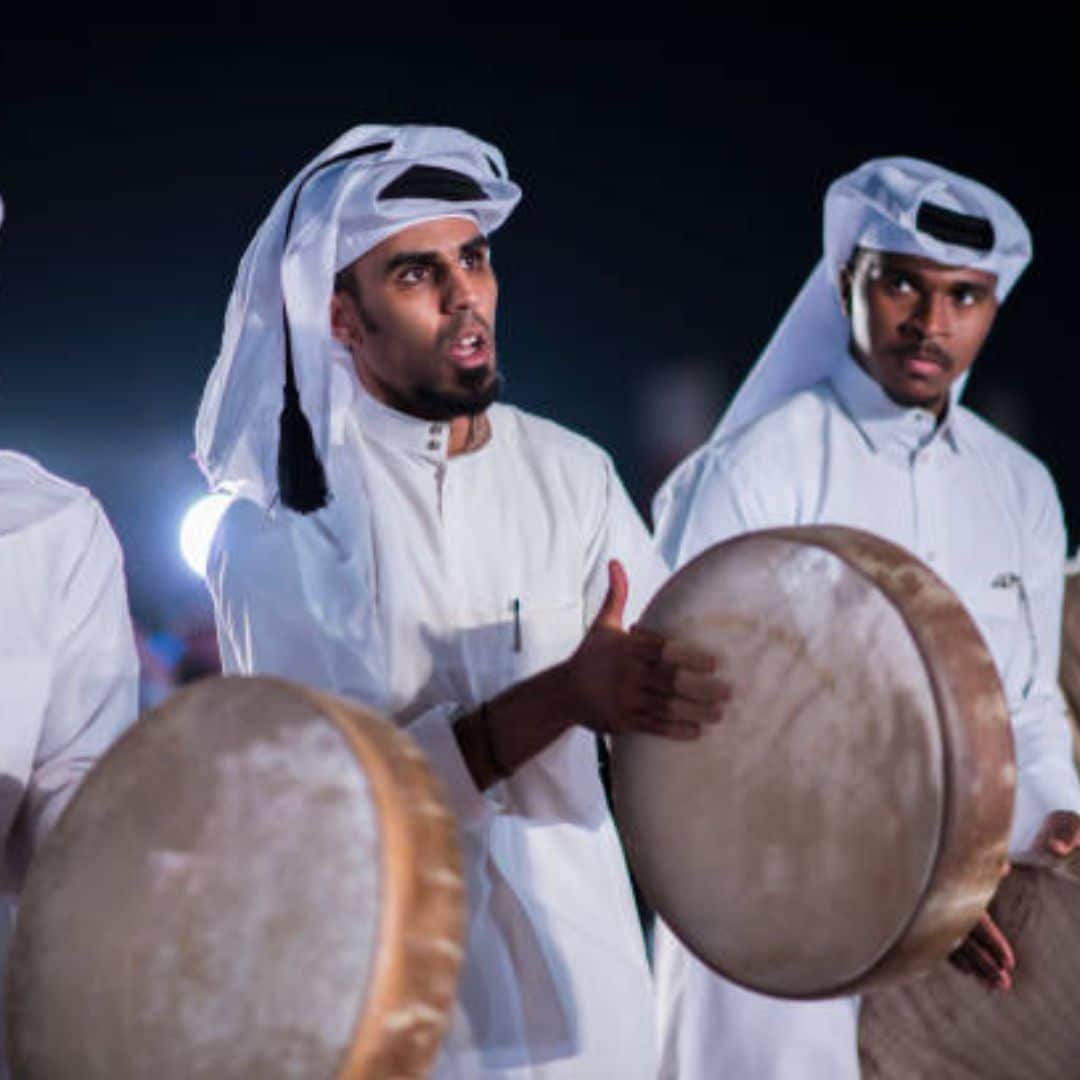
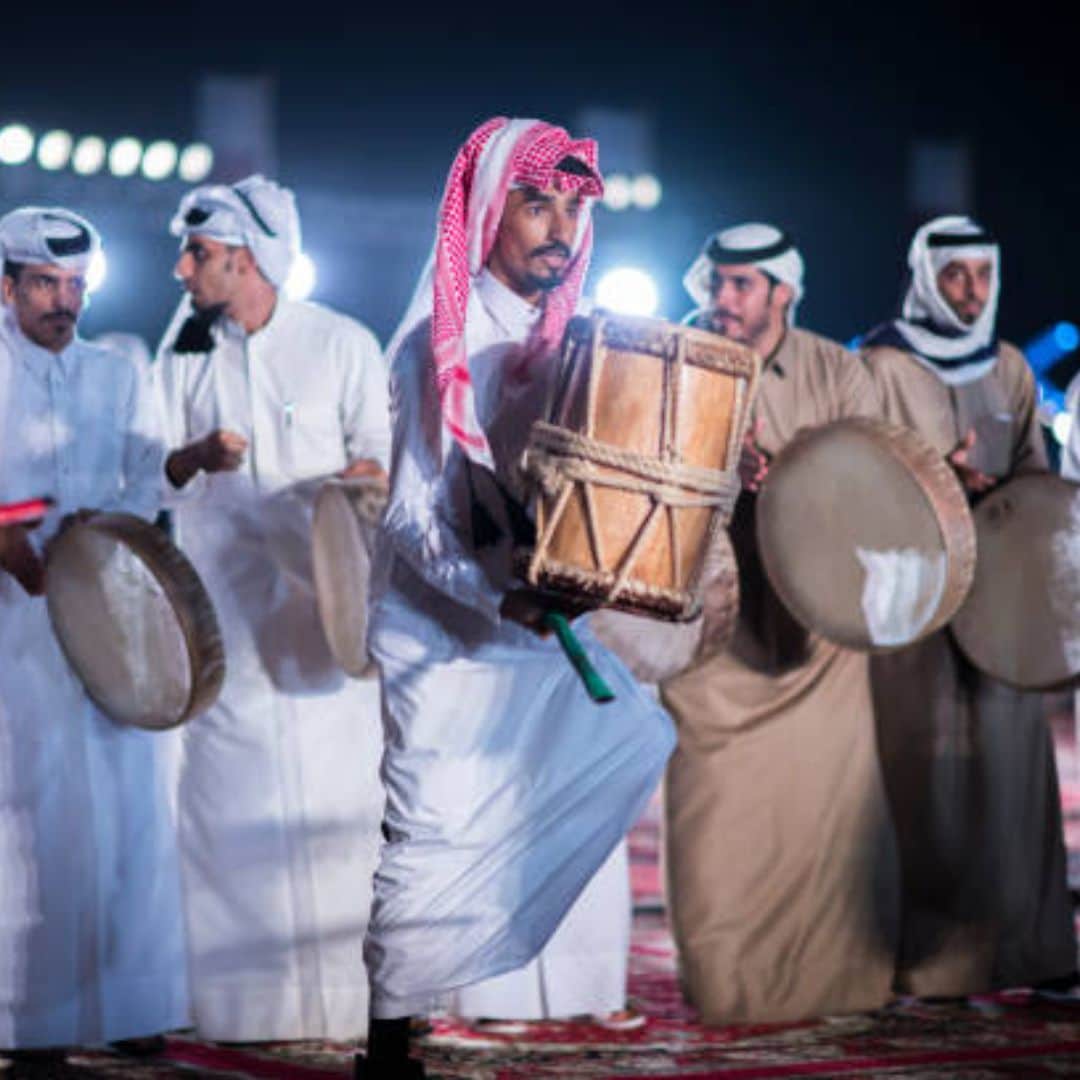
A Khaleeji band brings Gulf rhythms, oud, and usually a male vocalist performing Emirati and Saudi folk numbers, and works well for National Day events, government functions, and weddings where the families are Khaleeji. A Lebanese or Egyptian pop band is built for the dance floor: full rhythm section, keys, sometimes brass, and a lead vocalist performing contemporary Arabic pop, dabke numbers and crowd singalongs. A fusion band mixes a saxophone or DJ transitions into the traditional instrumentation, which hotels increasingly ask for on rooftop nights and brand launches where the brief is Arabic but modern.
Arabic Band Prices in Dubai: AED Table by Line-Up
Prices below are typical current rates for Dubai and Abu Dhabi bookings through an agency, covering musicians, instruments, costumes, and standard travel within the emirate. They move with day of week, venue distance, and whether a female vocalist is needed, who commands a premium in most line-ups. Confirm the final figure against your specific date and venue, since Ramadan, National Day and peak wedding season (October through March) all carry a surcharge.
| Line-up | Typical set | Price range (AED) | Notes |
|---|---|---|---|
| Solo oud player | 1x60 or 2x30 min | 1,500 to 3,000 | Common for majlis and small dinners |
| Oud and qanun duo | 2x45 min or 1x90 min | 3,000 to 7,000 | Acoustic, no PA needed for small rooms |
| Takht ensemble (4 to 5 piece) | 2x30 or 2x40 min | 7,000 to 12,000 | Nay, tabla, qanun, oud, optional violin |
| Khaleeji band (5 to 6 piece) | 2x30 min | 7,000 to 14,000 | Male vocalist, oud, percussion |
| Pop or fusion band (6 to 8 piece) | 2x30 or 3x20 min | 12,000 to 14,000 | Full rhythm section, lead vocalist, dance repertoire |
Female vocalist add-ons typically run AED 2,000 to 3,000 extra depending on reputation and set length. A sound engineer and basic PA for rooms over 150 guests adds roughly AED 1,500 to 3,000 if the venue does not already have house sound. If you are comparing a live band against other formats, our guide to DJ hire pricing in Dubai covers the same budget conversation from the other direction.
Arabic Entertainment Beyond the Band: Dancers and Troupes
A band is usually one piece of a wider arabic entertainment booking, not the whole brief. Clients who want the visual side of Arabic culture alongside the music commonly pair a live band with a belly dancer for hire in Dubai or a folk troupe performing dabke, with the band accompanying live rather than playing to a backing track. For Gulf-style events, an Ayala folklore group performing the traditional sword and hair-flick dance alongside a Khaleeji band is one of the most requested National Day and wedding combinations; see our page on the Ayala dancers for how that pairing usually works.
Some corporate and gala briefs also add a brass or marching element for arrivals, which is a separate booking from the main band; our brass and marching band hire page covers that format. If you are still scoping the whole entertainment mix for an event rather than just the music, our broader Arabic entertainment page and our full list of act types are the places to start before narrowing down to a specific band.
Repertoire by Occasion: Weddings, Ramadan, National Day, Corporate
The song list matters as much as the instrumentation. For a wedding, the standard structure is a zaffa procession set (drums and mizmar, or a shorter live zaffa segment before the couple enters), followed by a dinner set of classical and semi-classical numbers, then a dance set covering dabke, Khaleeji and Lebanese pop once the formal parts of the evening finish. Most planners book two 30-minute sets plus a short zaffa slot, timed around the entrance and cake cutting rather than running continuously.
Ramadan bookings for hotel iftar and suhoor tents run on a different clock entirely. Music starts only after the call to Maghrib prayer and the iftar meal, so a typical set does not begin before 8:30pm or 9pm, and volume stays lower than a normal corporate gig out of respect for prayer times through the evening. National Day events lean Khaleeji and patriotic repertoire, often paired with a folk dance troupe, and get booked out weeks in advance because government and semi-government teams book the same small pool of acts. Corporate galas usually want a background set during dinner (takht or duo) and a livelier closing set if there is a dance floor component. Our corporate event entertainment guide covers how a band fits alongside other acts on a larger run sheet.
Oud Band and Traditional Arabic Band Setups Explained
If your brief is specifically an oud band rather than a full pop line-up, you are almost certainly looking for background elegance, not a dance floor. The most requested combination is oud plus qanun, sometimes with a nay added for texture, seated rather than performing on a stage, positioned near the entrance or dinner tables. This setup works acoustically in rooms up to roughly 80 to 100 guests without amplification; beyond that, a single discreet microphone and a small speaker keep the sound present without turning it into a concert.
A genuinely traditional arabic band booking, in the sense hotel F&B managers and heritage-focused clients mean it, usually specifies acoustic or near-acoustic instrumentation, formal Arabic dress for the musicians, and a repertoire drawn from classical Egyptian, Levantine or Khaleeji sources rather than modern pop covers. If authenticity matters to your brief, say so explicitly when you request quotes: agencies will otherwise default to the more commercial pop line-up because it is the one requested most often. For event formats across live music generally, our live music artists for hire in Dubai page covers Arabic bands alongside other genres side by side.
Sound, Stage and Technical Requirements
Venue and headcount decide the technical rider, and getting this wrong is the single most common reason a band sounds worse live than on the video you were sent. Check the table below against your venue before confirming a booking.
| Guest count | Sound requirement | Space needed |
|---|---|---|
| Under 60 | Acoustic or one small speaker | Corner or lounge area, no stage needed |
| 60 to 150 | Small PA, 1 to 2 mics, monitor speaker | 2m x 2m minimum, riser optional |
| 150 to 400 | Full PA, sound engineer on site, 3 to 5 mics | Stage or riser, 3m x 2m or larger |
| 400 plus | Line array or house sound system, engineer, in-ear monitors for vocalist | Full stage, power drop confirmed with venue AV |
Ballrooms at venues like Atlantis The Palm, Madinat Jumeirah and Emirates Palace usually have house sound systems the band can patch into, which cuts cost. Outdoor settings such as a yacht deck, a desert majlis tent, or a mall atrium activation almost always need the band to bring its own power-independent PA, so confirm this early rather than assuming the venue supplies it.
Permits, NOCs and Ramadan Timing Rules
Live music in Dubai's public and semi-public venues falls under DET (Dubai's Department of Economy and Tourism, formerly DTCM) entertainment permit rules. Hotels and licensed venues generally hold a standing entertainment permit and simply need an internal NOC confirming your band, timing and volume, which their events team arranges once the booking is confirmed. Private villas, majlis events and residential compounds usually do not need a public permit, but anything in a public space, mall, beach club, or outdoor venue open to non-invited guests typically does.
Abu Dhabi runs the equivalent process through DCT Abu Dhabi, and timelines there can run a few days longer than Dubai, so build that into your planning if the event is at Yas Island or a Corniche venue. Ramadan adds a layer: most venues restrict amplified music until after Maghrib and iftar service is underway, and volume caps are stricter near mosques regardless of season. For the full breakdown of who applies for what and typical permit costs, see our DET/DTCM event permit cost guide.
The costliest mistake: booking the wrong line-up for the venue's sound rules
Some hotel ballrooms and beach clubs cap decibel levels strictly, especially near residential towers or during Ramadan evenings. Clients who book a full band with brass or amplified percussion without checking the venue's noise limit sometimes get cut off mid-set by hotel security, or have to swap to an acoustic configuration on the day with no time to rehearse it. Always confirm the venue's sound policy and share it with your agency before the booking is locked, not after the band arrives.
Booking Process: Lead Times and What Is Included
Most band in Arabic bookings can be confirmed 3 to 10 days ahead for a standard corporate or private event. Ramadan, National Day, and the peak wedding months of October to March get booked out further ahead, sometimes three to six weeks for the more requested Khaleeji and pop line-ups, because the same pool of experienced Arabic musicians is limited and works across multiple agencies.
A standard quote should include the musicians' fees, instruments, costumes appropriate to the occasion, standard travel across Dubai (extra for Abu Dhabi, Sharjah or further), and a stated number of sets and total performance minutes. It should not include sound equipment, a stage or riser, or a sound engineer unless specifically listed, since these are venue-dependent and quoted separately once the room is confirmed. Ask for these line items broken out so you know exactly what you are paying for before comparing quotes across agencies. Our event type pages are a useful starting point if you are matching a band against a specific event format rather than starting from the music alone.
Send us your event date, venue and headcount on WhatsApp at +971 50 541 7318 and we will come back with a line-up recommendation and a quote within a working day.
Frequently asked questions
How much does a band in Arabic cost in Dubai?
A band in Arabic in Dubai typically costs AED 1,500 to 3,000 for a solo oud player, AED 3,000 to 7,000 for an oud and qanun duo, AED 7,000 to 14,000 for a takht ensemble or Khaleeji band, and AED 12,000 to 14,000 for a full pop or fusion band with vocalist and dance floor repertoire. Final price depends on set length, whether a female vocalist is included, and venue location.
What is the difference between an Arabic band and a Khaleeji band?
An Arabic band is the broad category covering any line-up performing Arabic repertoire, from a solo oud player to a full pop act. A Khaleeji band is a specific type within that category, built around Gulf rhythms, oud and usually a male vocalist performing Emirati and Saudi folk numbers. It suits National Day events, government functions and weddings with Khaleeji families more than a general pop brief.
What counts as Arabic entertainment for an event?
Arabic entertainment covers live bands, solo musicians, belly dancers, folk dance troupes such as Ayala groups, and zaffa procession acts, often booked together rather than as a single act. A typical wedding or gala combines a band for the music with a dancer or troupe for the visual element, with the band usually accompanying the dancers live.
How long does an Arabic band play at a wedding?
Most Arabic band wedding bookings run two sets of 30 minutes each, or a shorter zaffa entrance segment plus one 45-minute dinner set, totalling roughly 60 to 90 minutes of live performance across the evening. Bands typically break between sets rather than playing continuously, and a dance set with dabke and Khaleeji numbers usually closes the night.
Do I need a permit to book a live Arabic band in Dubai?
Hotels and licensed venues generally hold a standing entertainment permit through DET and only need an internal NOC for your specific booking. Public venues, malls, beach clubs and outdoor spaces open to non-invited guests typically need their own DET entertainment permit. Private villas and majlis events usually do not. Abu Dhabi bookings go through DCT Abu Dhabi instead, with slightly longer timelines.
How far in advance should I book an Arabic band?
Standard corporate or private bookings can usually be confirmed 3 to 10 days ahead. Ramadan, National Day and the peak wedding season from October to March get booked out further in advance, sometimes three to six weeks for Khaleeji and pop line-ups, since the most requested musicians work across several agencies at once.
Can an Arabic band play after iftar during Ramadan?
Yes, but not before. Most Dubai and Abu Dhabi venues restrict amplified music until after the Maghrib call to prayer and iftar service is underway, so sets typically start around 8:30pm or 9pm. Volume also stays lower than a standard corporate gig, and venues near mosques apply stricter caps regardless of the season.
Ready to book a band in Arabic for your event?
Tell us the date, venue and headcount and we will send a line-up and quote within a working day.
Get a Free Quote