
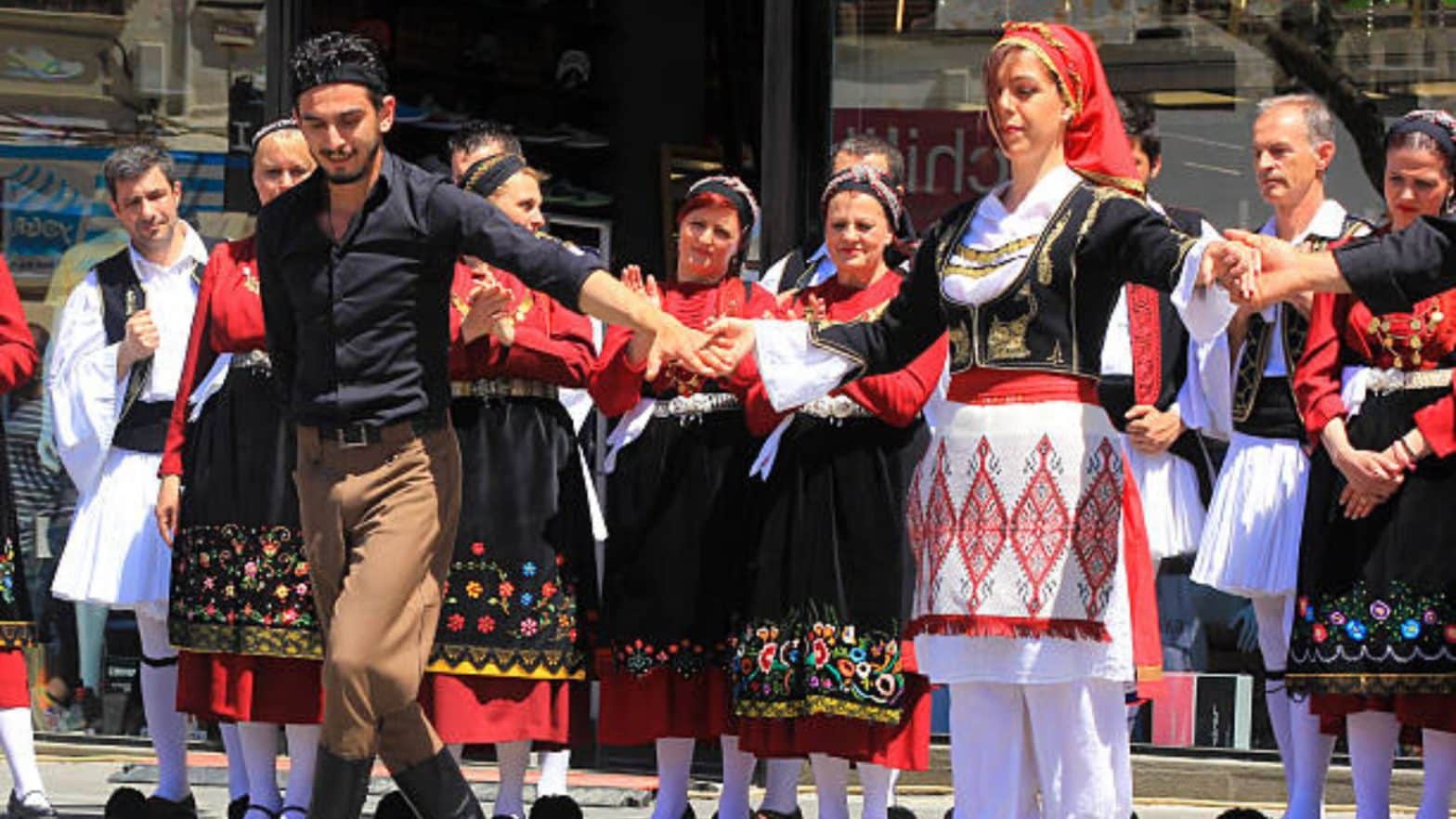
Sirtaki: What It Is and How to Hire Sirtaki Dancers in Dubai
The dance that made the world think it was watching ancient Greece, but was actually written for a film in the 1960s.


★★★★★We hired a band from Bella Entertainment for a work function and it was just brilliant. Great comms, great organisation and brilliant friendly performers. Recommending without hesitation.
Natasha Hatherall-Shawe, Google review
★★★★★We booked Bella Entertainment's African drummers and dancers for our corporate event, and it was an amazing experience! The 30-minute performance was energetic, engaging, and truly entertaining.
Kavya Ashok, Google review
★★★★★Organized my yacht party with hiring a sax player and DJ for my birthday. Very good timing from Bella team and excellent price quality entertainment agency in UAE.
Walter P., Google review
Rated 4.4 on Google from 25 reviews. Read all reviews
Sirtaki is a Greek dance created in 1964 for the film Zorba the Greek, blending the slower hasapiko and the faster hasaposerviko into one routine that starts slow and builds to a run. Dancers hold shoulders or hands in a line or circle, led by the front dancer, while the music by Mikis Theodorakis accelerates from a walking pace to a sprint. It has become the international symbol of Greek dance. In Dubai, sirtaki dancers can be booked for weddings, corporate Greek nights and private parties from roughly AED 2,500, usually as a two to three person troupe performing two sets with audience participation.
- What sirtaki actually is
- Where it came from: Zorba the Greek and hasapiko
- The steps, the line hold, and how the tempo builds
- The music and the costumes
- Zorba dance vs sirtaki: is there a difference
- Hiring sirtaki dancers for hire in Dubai: what is included
- Greek dance Dubai pricing, venues and permits
What sirtaki actually is
Sirtaki is a Greek folk dance performed in a line or open circle, dancers linking arms or resting hands on each other's shoulders, moving through a set of steps that starts at a slow walking tempo and speeds up until it is close to a run. It is not thousands of years old, and it is not from any single Greek village. It was composed as a piece of choreography for a 1964 film, and it worked so well that it was absorbed back into Greek popular culture as a real, danced-everywhere tradition. That is a rare thing: a dance invented for a screen that became a genuine folk dance.
At weddings and tavernas across Greece today, and at Greek nights in Dubai, sirtaki is usually the last dance of the evening, the one where everyone gets pulled onto the floor regardless of skill, because the steps are simple enough to fake and the tempo does the rest of the work.
Where it came from: Zorba the Greek and hasapiko
The composer Mikis Theodorakis wrote the score for Zorba the Greek, and the film's choreographer, Giorgos Provias, needed a dance for the closing beach scene where Anthony Quinn's character teaches a younger man to dance. Quinn had an injured foot and could not perform the fast, jumping steps of a traditional hasaposerviko, so Provias built a simpler routine around it: start with the slow, dignified hasapiko (the "butcher's dance"), then accelerate into the quicker hasaposerviko. The joined name, sirtaki, comes from the Greek word syrtos, meaning a dragging or dragged dance, referring to the shuffling, connected footwork rather than any leaping.
The film's final scene, the two men dancing on the beach as the music by Theodorakis builds, is the reason sirtaki became shorthand for "Greek dance" internationally, even though older, region-specific dances such as kalamatianos or tsamiko have a longer genuine history. Ask a Greek about this and most will tell you the same thing: sirtaki is beloved and danced constantly, and also acknowledged as a modern invention.
The steps, the line hold, and how the tempo builds
Dancers form a line or a loose open circle, arms across shoulders or hands held at shoulder height, facing slightly inward. The dance runs in three broad phases:
- Slow section (hasapiko feel): weighted steps side to side, a cross-step in front, a small pause, roughly matching a walking pace. The leader at the front signals direction changes.
- Building section: the same step pattern repeats but the music tempo lifts, so the steps compress and start to bounce slightly on the balls of the feet.
- Fast section (hasaposerviko feel): quick side steps, small kicks, occasional hops, with the line sometimes breaking into a near-run before the final musical hit.
The entire dance is built so a complete beginner can join at the slow section and get swept along as it speeds up, which is exactly why it works so well as an audience-participation number at weddings and corporate events rather than a pure stage performance.
The music and the costumes
The signature sirtaki music is Theodorakis's theme, usually played on bouzouki with clarinet, accordion or guitar behind it, starting around 80 to 90 beats per minute and climbing to well over 150 by the final bars. Live troupes booked for events in the UAE typically dance to a backing track of this theme, sometimes with a live bouzouki or clarinet player added for corporate budgets that stretch to it.
Costuming splits two ways. Male dancers commonly wear a fitted black shirt, dark trousers, sometimes a waistcoat, echoing the Zorba film look. Female dancers or mixed troupes often add a flowing white or blue dress referencing the Greek flag, or classical-style costume with a laurel motif for the more theatrical mythology-themed routines some agencies also offer alongside straight sirtaki. Blue and white is the dominant palette at almost every Greek-themed event in Dubai, because it reads instantly as "Greek" to a mixed international audience.
Zorba dance vs sirtaki: is there a difference
In practice, no, and this is the most searched confusion around the term. "Zorba dance" and "sirtaki" refer to the same choreography. The name Zorba comes from the film character, Zorba the Greek, and international audiences often call the whole dance "doing the Zorba" because that is the scene they remember. Greek dancers themselves almost always call it sirtaki. If an event brief in Dubai asks for a "Zorba dance" performance, a sirtaki troupe is exactly what is being requested, and any agency worth booking will confirm that on the call rather than quoting two separate acts.
Hiring sirtaki dancers for hire in Dubai: what is included
A standard booking is a troupe of two to four sirtaki dancers, professionally trained, performing two sets across an evening: an opening showcase set of six to ten minutes where they dance the full slow-to-fast routine themselves, followed by an interactive set where they pull guests onto the floor and lead them through the same steps. Most Dubai agencies, Bella Entertainment included, quote this as a package covering costumes, choreography, backing track or live musician if requested, and one rehearsal call with the venue's sound team.
Add-ons that come up constantly at Greek nights and Mediterranean-themed corporate dinners:
- Plate smashing: a scripted, controlled moment using safe breakaway plates, popular at the climax of the fast section. Needs sign-off from the venue's banqueting team in advance, not something to spring on a five-star ballroom floor unannounced.
- Live bouzouki or clarinet player: lifts the set from "recorded track with dancers" to a genuine live music moment, at extra cost.
- Fire or flag elements: some troupes add a short fire-spinning or flag segment either side of the sirtaki set for outdoor venues.
- Costume changes: a second, more theatrical mythology-inspired look for photo moments before switching into the classic sirtaki outfit.
If your event also needs a wider Mediterranean or regional feel rather than Greek specifically, our belly dancers for hire in Dubai page and our live music artists page cover the acts that pair most often with a sirtaki set on the same bill.
Greek dance Dubai pricing, venues and permits
Rates vary by troupe size, whether a live musician is added, and whether the booking is a straight two-set evening or a longer strolling and mingling engagement. As a guide, current rates for a professional troupe run as follows, and it always pays to confirm the exact figure for your date since weekend and peak-season demand pushes prices up.
| Package | Typical duration | Indicative AED |
|---|---|---|
| Duo, showcase set only | 1 set, 8 to 10 minutes | AED 2,500 to 3,500 |
| Trio or quartet, two sets | 2 sets across the evening | AED 4,500 to 7,000 |
| Troupe plus live bouzouki or clarinet | 2 sets, one live musician | AED 7,500 to 11,000 |
| Plate smashing add-on | per event, scripted moment | AED 500 to 1,200 |
| Full Greek night (dancers, MC, DJ transition) | 3 to 4 hours | AED 12,000 and up |
We have booked sirtaki and Greek-themed sets at ballrooms including Atlantis The Palm, Madinat Jumeirah and Address Downtown in Dubai, and at Emirates Palace and Yas Island venues in Abu Dhabi, plus a growing number of yacht parties where the fast section of the dance gets adjusted for deck space. If the event is a public or ticketed one rather than a private wedding or in-house corporate dinner, it likely needs a DET entertainment permit in Dubai or a DCT permit in Abu Dhabi, arranged through the venue or your agency ahead of the date. Our DTCM event permit cost guide covers what that involves and roughly what it costs.
The mistake that costs the most: booking dancers with no plan for the plate smash or the sound handover
The single most expensive error we see is a client booking a sirtaki troupe direct or through an unfamiliar supplier, then finding out on the night that the venue's five-star banqueting team will not allow broken plates on their floor, or that the hotel's in-house AV system cannot take the troupe's backing track without a DJ or sound engineer present to hand off cleanly into the next part of the evening. Confirm both of these with the venue in writing before the deposit is paid, not on the day.
For a wider view of Greek night entertainment alongside other acts, our corporate event entertainment guide and full list of acts cover how sirtaki dancers slot alongside live bands, MCs and DJs for a themed evening.
Send us your event date, venue and headcount on WhatsApp at +971 50 541 7318 and we will come back with a sirtaki dancer quote within a working day.
Frequently asked questions
What is sirtaki dance?
Sirtaki is a Greek dance performed in a line or circle with arms linked or hands on shoulders, moving through steps that start slow and speed up until the final section is nearly a run. It was created in 1964 for the film Zorba the Greek by combining the slower hasapiko dance with the faster hasaposerviko, and it has since become the internationally recognised symbol of Greek dance.
Is Zorba dance the same as sirtaki?
Yes. Zorba dance and sirtaki refer to the same choreography. The name "Zorba" comes from the film Zorba the Greek, where the dance first appeared, and many people outside Greece know it by that name. Greek dancers and event agencies use the term sirtaki, so booking a "Zorba dance" performance and booking "sirtaki dancers" gets you the same act.
How much does it cost to hire sirtaki dancers in Dubai?
A duo performing one showcase set typically costs AED 2,500 to 3,500. A trio or quartet performing two sets across an evening, including an interactive audience segment, runs roughly AED 4,500 to 7,000. Adding a live bouzouki or clarinet player pushes this to around AED 7,500 to 11,000. Rates vary by date, headcount and venue, so confirm the exact figure when you request a quote.
How long is a sirtaki dance performance?
A single showcase set usually runs 8 to 10 minutes, covering the full slow-to-fast progression of the dance. Most event bookings include two sets across the evening: an opening showcase followed by an interactive set where the troupe leads guests through the steps, bringing total stage time to around 20 to 25 minutes plus mingling time.
Do I need a permit for Greek dancers or a Greek night in Dubai?
Private events inside a hotel or venue, such as a wedding reception or in-house corporate dinner, are usually covered by the venue's own arrangements. Public or ticketed Greek night events generally need a DET entertainment permit in Dubai, or a DCT permit in Abu Dhabi. Confirm this with your venue or event agency before the date, since requirements depend on ticketing and venue type.
Can sirtaki dancers perform plate smashing at a Dubai hotel?
Yes, using safe breakaway plates designed for performance, but this needs sign-off from the venue's banqueting or events team in advance. Five-star hotel ballrooms in Dubai and Abu Dhabi have differing policies on plate smashing, so confirm it as part of your booking rather than assuming it is included, and budget roughly AED 500 to 1,200 as an add-on.
What is the difference between sirtaki and belly dance for a themed event?
Sirtaki is a Greek line or circle dance suited to Greek nights, Mediterranean-themed weddings and corporate dinners with a Hellenic theme. Belly dance is a separate Middle Eastern solo performance style, commonly booked for Arabic or general Middle Eastern themed events in the UAE. Some events book both acts on the same evening for a broader Mediterranean and Middle Eastern feel. See our belly dancers for hire page for that option.
Book Sirtaki Dancers for Your Dubai or Abu Dhabi Event
Tell us your date, venue and headcount and we will send a quote within a working day.
Get a Free Quote