
Emirati Traditional Dance in Dubai
Ayala, Harbiya, Razfa and Yola troupes for weddings, National Day, Ramadan tents and corporate gala dinners, booked and permitted properly.


★★★★★We hired a band from Bella Entertainment for a work function and it was just brilliant. Great comms, great organisation and brilliant friendly performers. Recommending without hesitation.
Natasha Hatherall-Shawe, Google review
★★★★★We booked Bella Entertainment's African drummers and dancers for our corporate event, and it was an amazing experience! The 30-minute performance was energetic, engaging, and truly entertaining.
Kavya Ashok, Google review
★★★★★Organized my yacht party with hiring a sax player and DJ for my birthday. Very good timing from Bella team and excellent price quality entertainment agency in UAE.
Walter P., Google review
Rated 4.4 on Google from 25 reviews. Read all reviews
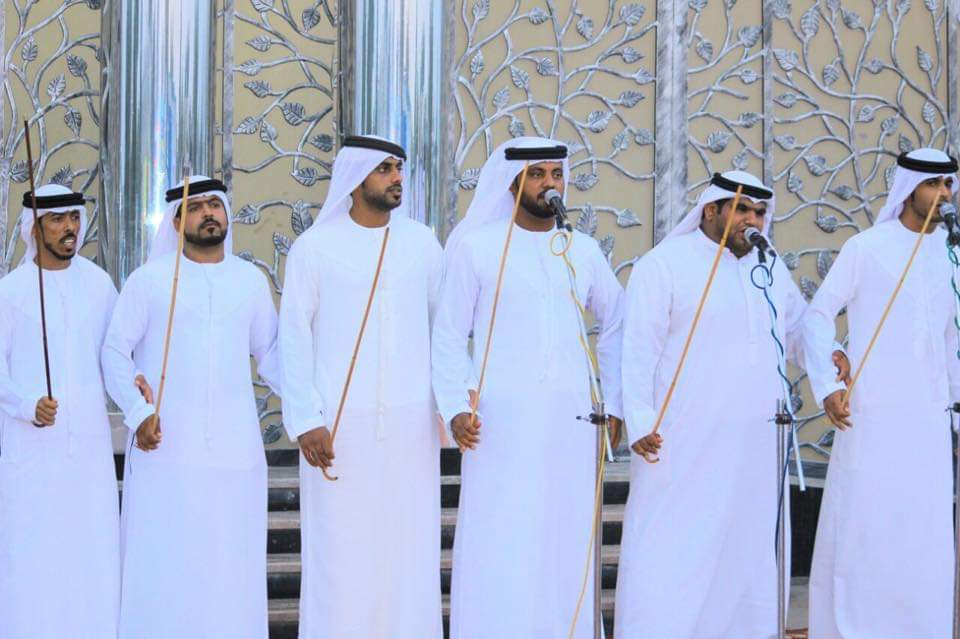
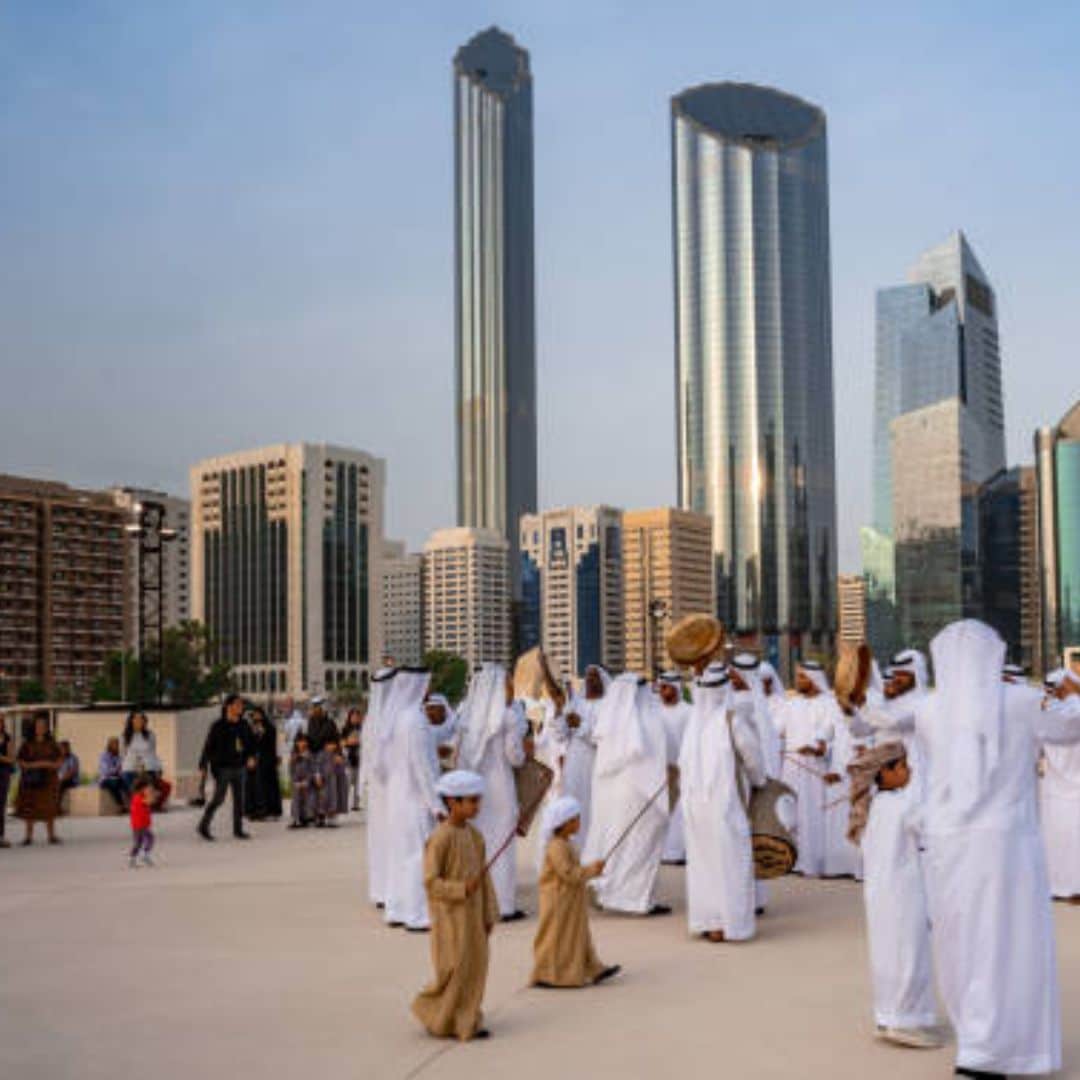
Emirati traditional dance covers a group of Khaleeji folk performances, Al Ayala (the stick and rifle dance done by men in two facing rows), Harbiya, Al Razfa, Yola and Al Liwa, each tied to a different occasion or region of the UAE. In Dubai, troupes run from 4 to 16 performers, shows are usually set as 2 sets of 30 minutes or 3 sets of 20 minutes, and pricing runs roughly AED 3,500 to AED 14,000 depending on troupe size, live drummers versus recorded music, and whether it is a public or private venue. Public venues need a DET entertainment permit, hotels need an internal NOC, and Ramadan bookings shift to after iftar.
- What counts as Emirati traditional dance
- Al Ayala, Harbiya, Razfa, Yola and Al Liwa explained
- Troupe sizes and show length
- UAE traditional dance prices in Dubai
- Where these shows get booked
- Permits, NOCs and dress code
- What goes wrong
- FAQ
What counts as Emirati traditional dance
Emirati traditional dance is not one dance, it is a family of Khaleeji folk performances that predate the UAE itself, each with its own rhythm, formation and occasion. Some are war dances performed by men with sticks or rifles, some are welcome dances performed for guests of honour, and some are women's hair dances performed at weddings. What they share is live or recorded percussion, chanted poetry, and a formation that faces the audience or faces each other in two lines.
In Dubai and across the UAE, these acts get booked under a few labels: Emirati dance, UAE traditional dance, Khaleeji dance, or by the name of the specific dance itself, Al Ayala, Harbiya, Razfa or Yola. A good agency will ask which occasion you're marking before recommending which one, because a National Day gala and a wedding welcome call for different dances entirely.
Al Ayala, Harbiya, Yola and Razfa explained
Each dance has a distinct look and a distinct fit. Booking the wrong one for the occasion is a common and avoidable mistake.
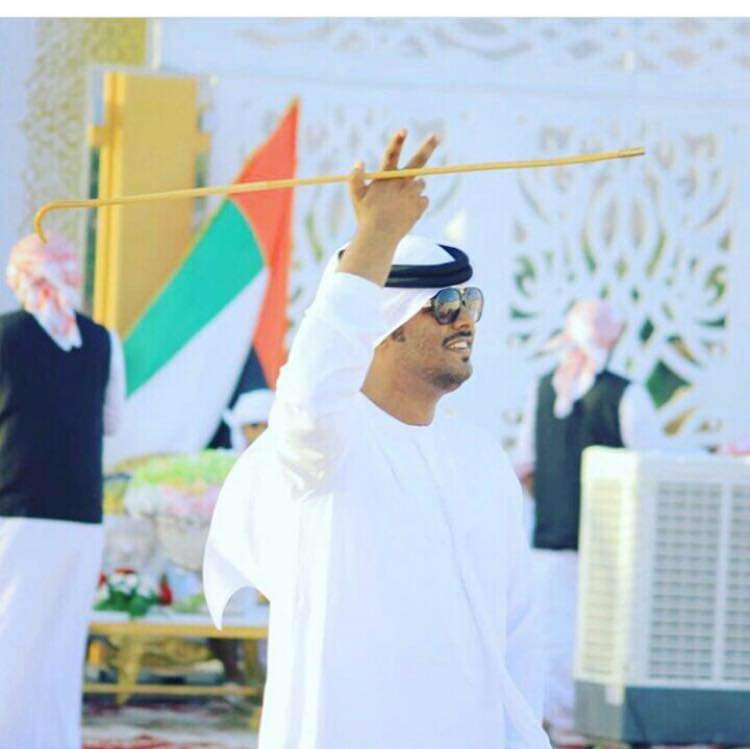
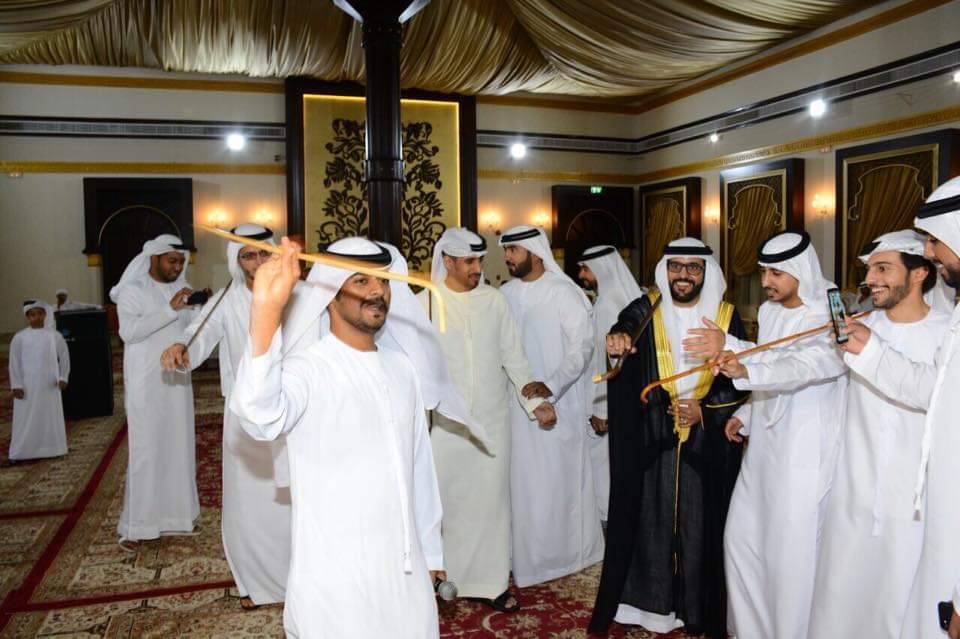
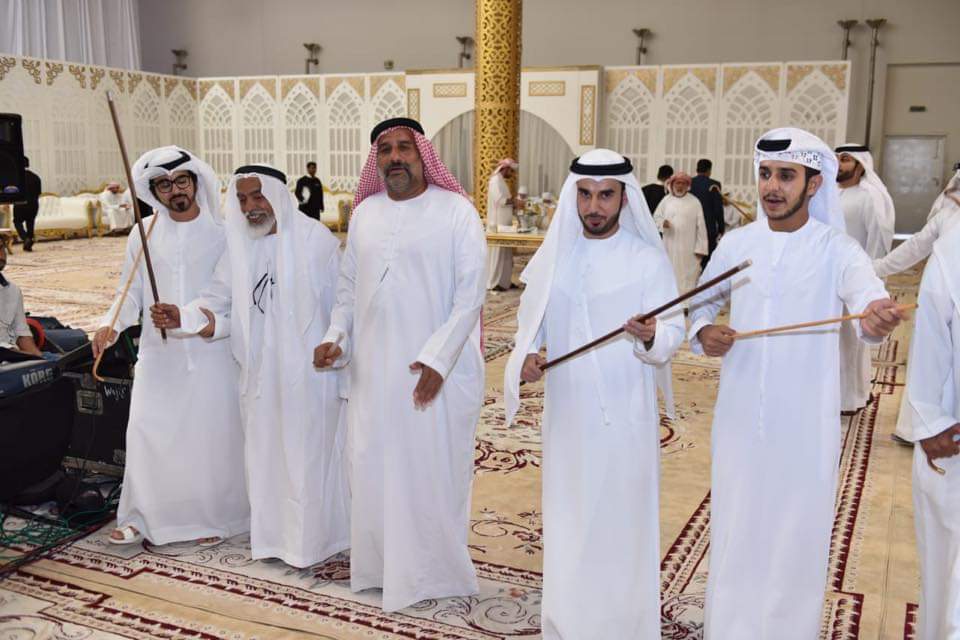
- Al Ayala: the best known Emirati dance internationally. Two rows of men face each other holding thin bamboo canes or ceremonial rifles, swaying and tapping in time with drums while a poet-led chant runs between the rows. Historically a war dance, today it is the default for National Day, government functions and grand wedding entrances. Troupes of 10 to 16 make the biggest impact.
- Harbiya: closely related to Ayala and sometimes used interchangeably in Dubai, but generally faster paced with more emphasis on the rifle or sword movement. Common at men's wedding majlis and heritage village events.
- Al Razfa: a slower, more formal version of the line dance, often performed at royal and government receptions and used to greet dignitaries. Heavier on the chant, lighter on movement, and considered the most ceremonial of the group.
- Yola: a distinctive dance where performers, usually young men, toss and spin a stick or cane above the head in rhythm, sometimes performed solo or in small groups rather than long rows. It reads as more energetic and playful than Ayala and photographs well for stage or mall activations.
- Al Liwa: rooted in the UAE's East African and Baluchi maritime heritage, performed with drums and sometimes a horn-like instrument, historically tied to pearl diving communities. Less commonly requested but available for heritage-themed events wanting something outside the mainstream Ayala.
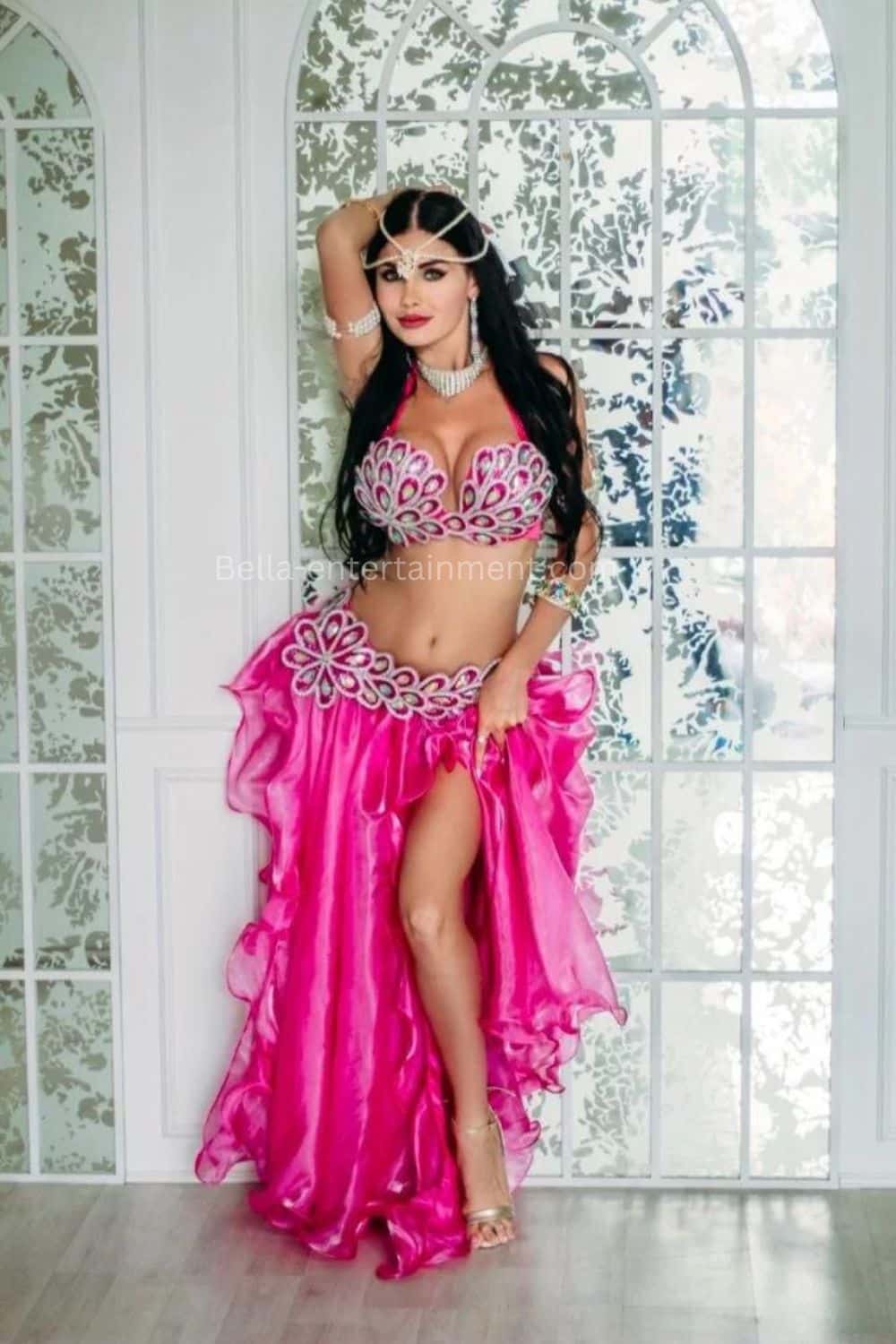
- Khaleeji dance (women's): a broader term covering women's performances including the hair-swinging dance seen at weddings, performed solo or by a small troupe, danced to Khaleeji pop or traditional wedding songs. Frequently booked alongside a belly dance or Tanoura act for a mixed entertainment set.
- Stick dance: sometimes used as a general English label for Ayala or Harbiya by clients unfamiliar with the Arabic names. Worth clarifying with your agency which specific dance you actually want, since the visual and the crew size differ.
We book all of these individually, see the full list of acts we supply if you're comparing folk dance against live bands, DJs or MCs for the same event.
Troupe sizes and show length
Ayala and Harbiya troupes are priced by headcount because more performers means a wider, more dramatic formation. A 4 to 6 person troupe suits a hotel lobby welcome or a smaller majlis. An 8 to 12 person troupe is the common choice for wedding stages and corporate gala entrances. A 14 to 16 person troupe is reserved for National Day activations, large ballrooms and outdoor government events where the formation needs to fill a wide stage.
Show structure is fairly standard across Dubai agencies: either 2 sets of 30 minutes with a short break, or 3 sets of 20 minutes spread across a longer event, such as cocktail hour, main stage arrival and closing. A single 15 to 20 minute welcome set is common for airport arrivals, red carpet moments and hotel check-in experiences.
UAE traditional dance prices in Dubai
Prices vary by troupe size, whether drummers are live or recorded, venue type and how far the crew travels. The ranges below are typical for Dubai and Abu Dhabi bookings, confirm the exact figure against your date and venue since National Day week and Ramadan carry a premium.
| Act | Troupe size | Set length | Typical price (AED) |
|---|---|---|---|
| Al Ayala (small) | 4 to 6 performers | 2 x 20 min | 3,500 to 6,000 |
| Al Ayala (standard) | 8 to 12 performers | 2 x 30 min | 6,500 to 10,000 |
| Al Ayala (large, National Day scale) | 14 to 16 performers | 3 x 20 min | 10,500 to 14,000 |
| Harbiya troupe | 6 to 10 performers | 2 x 20 to 30 min | 4,500 to 9,000 |
| Al Razfa (ceremonial) | 8 to 12 performers | 1 to 2 sets, 15 to 20 min each | 5,500 to 10,000 |
| Yola dancer(s) | 1 to 4 performers | 2 x 15 to 20 min | 1,800 to 4,500 |
| Khaleeji dance (women's, solo) | 1 performer | 2 x 15 min | 1,500 to 3,000 |
| Live drummers add-on | 2 to 4 drummers | runs with troupe | 1,200 to 2,500 |
These figures include costumes, sound arrangements coordinated with your venue's AV or ours, and standard travel within Dubai. Travel to Abu Dhabi, Sharjah or further afield, and any request for a custom stage set or added props, is quoted separately. If your event also needs a stage, truss or sound system built from scratch, our corporate event entertainment page covers how production and talent get bundled.
Where these shows get booked
The bulk of our bookings fall into a handful of recurring occasions, each with its own expectations.
- National Day and UAE Flag Day: the busiest period for Ayala and Yola bookings, government and semi-government teams book weeks ahead, mall activations run multiple shows a day.
- Hotel welcome and guest arrival: a small Ayala or Yola set in the lobby or driveway for VIP check-ins, delegation arrivals or gala dinner entrances at hotels like Atlantis The Palm, Madinat Jumeirah or Emirates Palace.
- Weddings: Ayala or Harbiya for the groom's majlis and male guest arrival, a Khaleeji or hair dance performer for the women's hall, often booked as a pair.
- Government and corporate events: Al Razfa for formal receptions and ribbon cuttings, Ayala for larger conference openings and product launches at Dubai World Trade Centre or Expo City Dubai.
- Ramadan and Eid: shorter sets after iftar in hotel Ramadan tents and majlis setups, timing shifts later in the evening across the whole month.
- Exhibitions and mall activations: repeat 15 to 20 minute Yola or Ayala sets through the day to draw footfall, priced per show or per half day.
These acts are frequently bundled with falconry displays, camels, Arabic coffee (gahwa) service and henna artists for a full heritage corner at exhibitions and National Day activations. Ask for a combined quote if you need more than one element, it is usually cheaper than booking each separately.
Permits, NOCs and dress code
Any paid performance in a public venue in Dubai needs a DET (formerly DTCM) entertainment permit, and Abu Dhabi requires the equivalent DCT approval. Hotels and private venues generally hold a standing entertainment license and only need an internal NOC confirming the act, timing and any props such as rifles or sticks used in Ayala, since prop weapons need to be flagged in advance even when they are ceremonial and blunt.
Costumes are traditional: kanduras and headscarves for the men's dances, jalabiya or traditional dress for women's performances. Troupes bring their own costumes and canes or rifles as standard. For mixed corporate audiences, most agencies keep the performance respectful and family-appropriate by default, if you want a specific interpretation or a longer chant section for a government audience, say so at booking.
Full detail on the permit process and typical government fees is on our DTCM event permit cost page, worth reading before you finalise a public venue booking.
The costliest mistake: booking the wrong dance for the audience
Clients regularly ask for "Emirati dance" without specifying which one, then are surprised when a wedding planner sends a rifle-heavy Ayala troupe to a mixed corporate cocktail reception, or a Razfa troupe suited to formal government protocol gets booked for a lively mall activation that needed the energy of Yola. Confirm the occasion, audience and venue type with your agency before the deposit, not on site.
Lead time and how booking works
Standard bookings need 3 to 10 days notice for troupe availability, costume prep and permit paperwork. National Day week, Ramadan and peak wedding season (October to April) fill up faster, book 3 to 4 weeks ahead if you can, especially for larger 14 to 16 person Ayala troupes. We handle permit coordination for public venues as part of the booking, and confirm hotel NOC requirements directly with your venue's events team.
If you're comparing folk dance against other live acts for the same event, our belly dancers for hire and live music artists pages cover pricing for those alongside Emirati dance in a mixed entertainment lineup.
Send us your event date, venue and expected headcount on WhatsApp at +971 50 541 7318 and we will come back with a quote and act recommendation within a working day.
Frequently asked questions
What is Al Ayala dance?
Al Ayala is a traditional Emirati stick dance performed by men arranged in two facing rows, swaying and tapping bamboo canes or ceremonial rifles in time with drums while a chant runs between the lines. Originally a war dance, it is now the standard choice for UAE National Day, weddings and formal government events, with troupes typically ranging from 8 to 16 performers.
What is the difference between Harbiya and Al Ayala?
Harbiya and Al Ayala are closely related Emirati line dances and the names are sometimes used interchangeably in Dubai. Harbiya generally has a faster tempo and more emphasis on rifle or sword handling, and is common at men's wedding majlis, while Al Ayala is the more ceremonial version used for National Day and government functions.
What is Yola dance?
Yola is an Emirati folk dance where performers, usually young men, toss and spin a stick or cane rhythmically above the head, often solo or in small groups rather than long facing rows. It is more energetic and visually dynamic than Ayala, and is a popular choice for mall activations, exhibitions and National Day stage shows in Dubai.
How much does it cost to hire Emirati dancers in Dubai?
Prices in Dubai typically range from about AED 1,800 for a small Yola act to AED 14,000 for a full 14 to 16 person Al Ayala troupe performing three sets. Mid-sized 8 to 12 person Ayala troupes for weddings and corporate events usually fall between AED 6,500 and AED 10,000, including costumes and standard travel.
Do I need a permit for Emirati dance performances in Dubai?
Public venues in Dubai require a DET entertainment permit for any paid performance, and Abu Dhabi requires DCT approval. Hotels and licensed private venues usually only need an internal NOC confirming the act and any props used, such as ceremonial rifles or sticks. Your booking agency should handle permit coordination for public venues as part of the quote.
Can Emirati traditional dance be booked for Ramadan events?
Yes, Emirati dance troupes are commonly booked for Ramadan iftar and suhoor tents, with performance timing shifted to after iftar rather than daytime. Sets tend to run shorter, around 15 to 20 minutes, to fit the evening's schedule around prayer and dining. Book 2 to 3 weeks ahead during Ramadan since demand across hotels rises sharply.
Book Emirati traditional dance for your event
Send your date, venue and headcount and get a quote within a working day.
Get a Free Quote