Dabke Dance in Dubai: Meaning, Music and Hiring a Troupe
What the dance means, how it is performed, and what it costs to book a live dabke show in the UAE.


★★★★★We booked Bella Entertainment's African drummers and dancers for our corporate event, and it was an amazing experience! The 30-minute performance was energetic, engaging, and truly entertaining.
Kavya Ashok, Google review
Rated 4.4 on Google from 25 reviews. Read all reviews
Dabke dance is a Levantine line dance from Lebanon, Syria, Jordan and Palestine, danced in a row or semicircle with synchronised stomping, small leaps and a lead dancer called the lawweeh who breaks formation to improvise. It grew out of harvest and house building customs and is now the standard dance at weddings and national celebrations across the region. In Dubai and Abu Dhabi, a professional dabke troupe for a wedding or corporate event typically runs from AED 4,000 to AED 12,000 depending on dancer count, show length and whether live drummers or a mijwiz player are added.
- What dabke is and where it comes from
- The regional styles: Lebanese, Palestinian, Syrian and Jordanian dabke
- How dabke is danced: the lawweeh, the stomp, the formation
- The music: tabla, mijwiz, oud and the dabke rhythm
- Booking a dabke show in Dubai: troupe sizes and AED prices
- Dabke for weddings, zaffa and corporate events in the UAE
- Permits and venue rules for dabke performances
- FAQ
What dabke dance is and where it comes from
Dabke dance is a folk line dance from the Levant, the region covering Lebanon, Syria, Jordan and Palestine. Dancers stand shoulder to shoulder in a line or a broken circle, arms linked or hands joined, and move together in a stamping, syncopated step that hits the ground on the offbeat. The word dabke comes from the Arabic verb meaning to stamp the feet, and that stamp is the whole point of the dance: it is meant to be heard as much as seen.
The dance is generally traced back to rural building customs, when neighbours would stand in a row on a mud roof and stamp it flat together, with someone calling out the rhythm to keep the group in time. Whether or not that origin story is literal, the structure survives in the dance today: a caller or lead dancer, a synchronised group, and a beat that gets faster as the night goes on. Over generations it moved from rooftops to village weddings to the stage, and it is now performed at everything from a family celebration in Amman to a gala dinner in Dubai.
Lebanese dabke, Palestinian dabke and the other regional styles
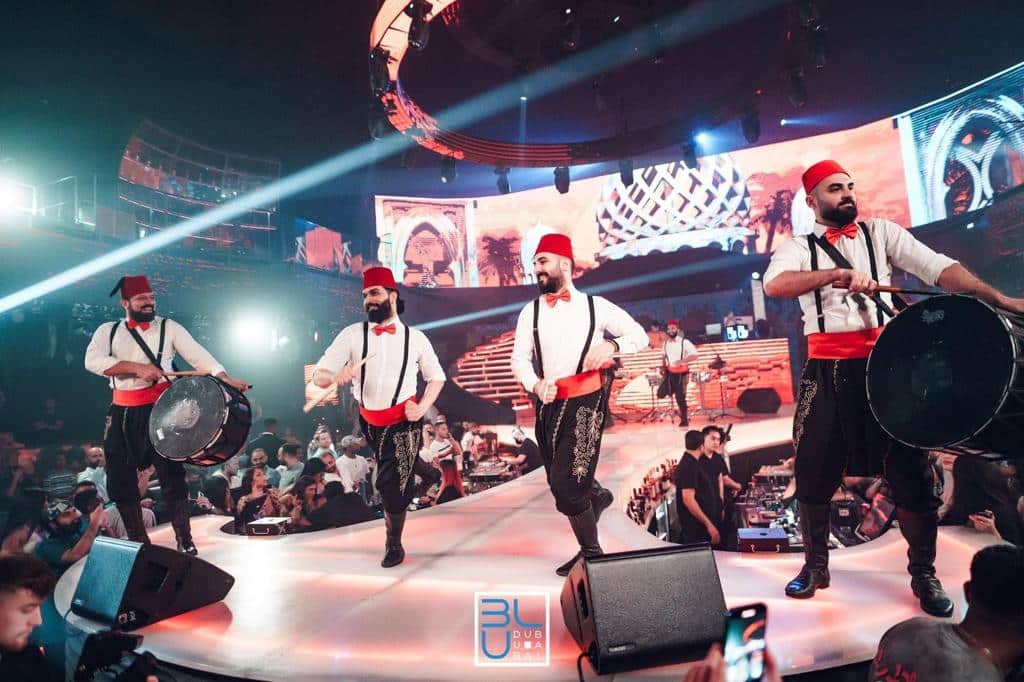
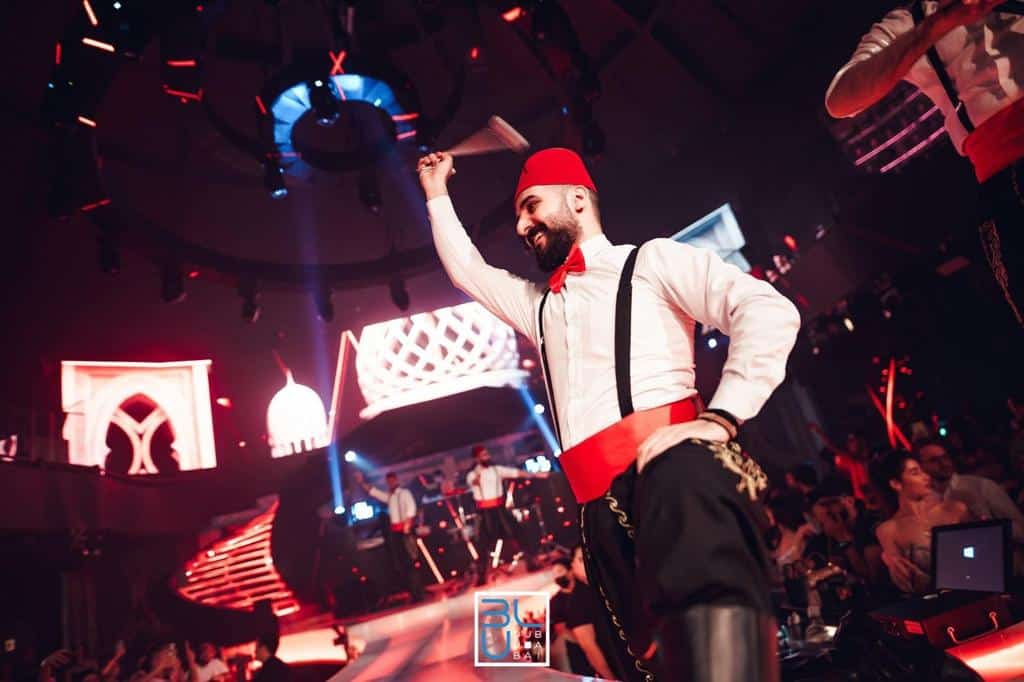
Every country in the Levant has its own dabke, and the differences matter to anyone booking a show. Lebanese dabke dubai bookings are the most requested style with Bella Entertainment's UAE clients, partly because of the size of the Lebanese community here and partly because it reads well on camera: sharper footwork, a tighter line, and a showier lawweeh who spins, jumps and taps a cane or stick against the ground.
- Lebanese dabke: fast, precise footwork, often with a decorated cane (assaya) used by the lead dancer for tricks and flourishes.
- Palestinian dabke: heavier stamping, strong shoulder holds, and a more grounded, weighted step, often performed to a slower build before the tempo lifts.
- Syrian dabke: known for the "dabke al-Shamaliyya" style in the north, with looser arm work and call and response chanting between dancers.
- Jordanian dabke: similar footwork to the Palestinian style, commonly danced at weddings alongside sung poetry known as zajal.
A good troupe can usually blend two or three of these styles inside one show, opening slower and traditional, then shifting into a faster, modern-choreographed set with wider formations for a stage.
How dabke is danced: the lawweeh, the stomp, the formation
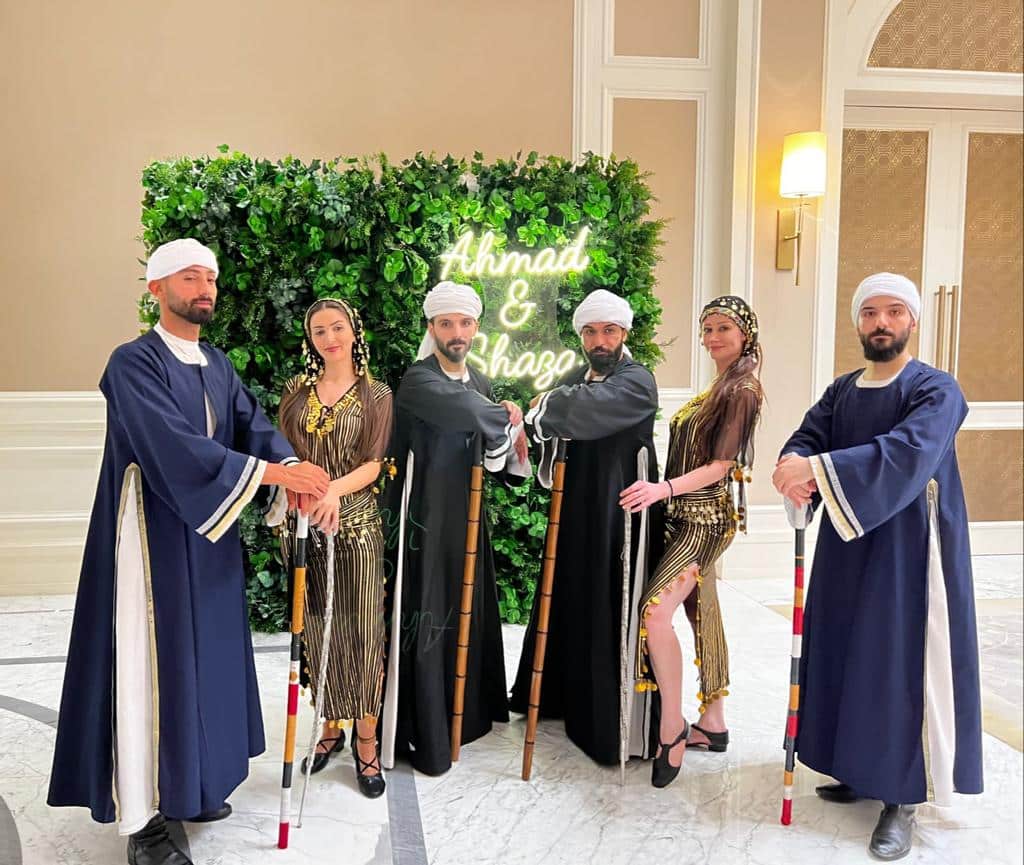
The core unit of any dabke line is the lawweeh, the lead dancer positioned at the head or centre of the row. The lawweeh sets the tempo, calls changes in formation, and periodically breaks away from the line to improvise a solo, jumping, twisting a cane, or dropping into a low squat kick before rejoining the group. Everyone else in the line is expected to stay locked together: shoulders in contact or hands joined, feet hitting the ground in unison, weight dropping heavily on the stamp rather than lifting lightly like a ballroom step.
A typical sequence moves through three phases: a slow entrance where the line forms and walks the beat, a middle section with the main stamping pattern and small hops, and a fast closing section where the lawweeh takes over and the group speeds up until the number ends on a sudden stop. Formations shift between a straight line, a horseshoe, and a full circle depending on the space available, which is one reason troupes ask in advance whether a show is on a stage, a dance floor, or an outdoor lawn.
The instruments and rhythm behind a dabke show
Dabke is danced to a specific set of instruments, and a live dabke band changes the feel of an event far more than a recorded track. The tabla, a goblet-shaped hand drum, carries the core beat. The mijwiz, a double-pipe reed instrument with a buzzing, nasal tone, carries the melody and is the sound most people associate with the dance. The oud, a fretless lute, adds harmony in slower sections, and a daf or riq frame drum is often layered on top for texture.
The tempo in a live dabke band typically climbs from around 90 beats per minute in the opening section to well over 140 by the closing stretch, which is what pulls a hesitant crowd from their seats onto the floor. For events where budget allows, booking a live mijwiz player and drummer alongside the dance troupe gets noticeably better guest engagement than a dance-only show over a backing track, because guests can see where the beat is coming from and it is easier to jump in.
Booking dabke dancers in Dubai: troupe sizes and prices
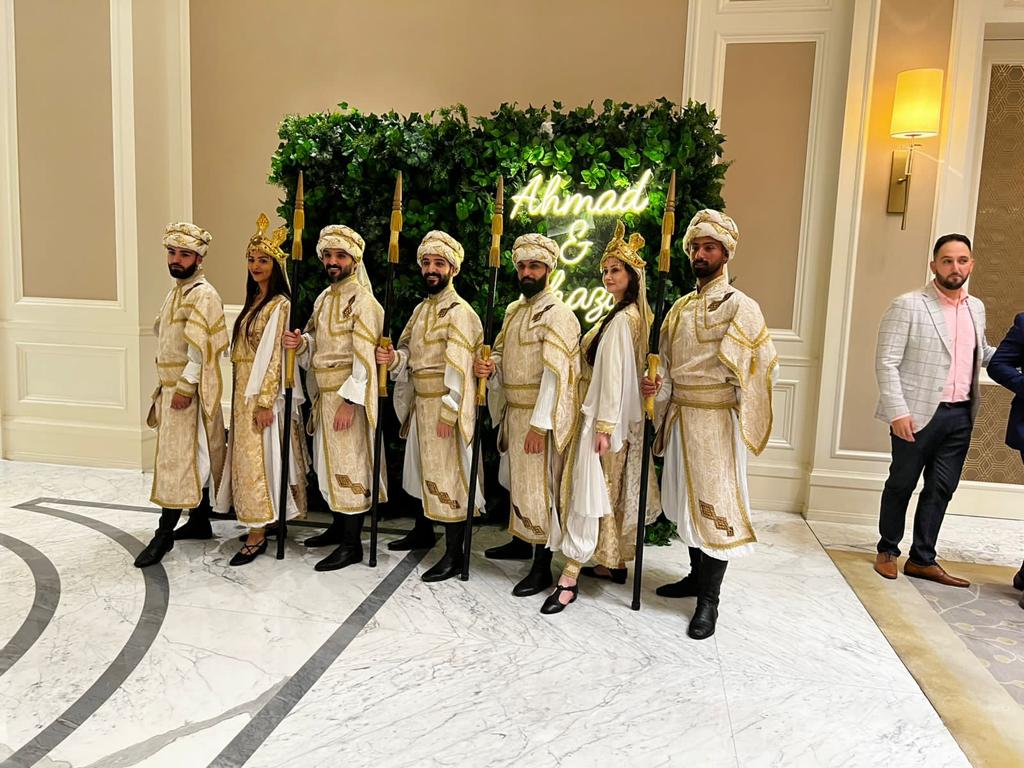
Dabke dancers dubai bookings through Bella Entertainment typically run as a troupe of four to eight performers, plus an optional live drummer or mijwiz player. A standard show is 10 to 15 minutes of choreographed dabke, often followed by a short interactive segment where the troupe pulls guests from the crowd into the line, which is genuinely the part most clients ask for by name afterwards.
Prices depend on troupe size, show length, whether you want live musicians rather than a backing track, and whether the performers need to travel outside Dubai. Confirm the exact quote against your date and venue, since peak wedding season and Ramadan/Eid periods carry higher demand and can push prices toward the top of the range.
| Package | Troupe size | Show length | Typical AED price |
|---|---|---|---|
| Solo lawweeh + 2 dancers | 3 performers | 8 to 10 minutes | AED 4,000 to 5,500 |
| Standard dabke troupe | 4 to 5 performers | 10 to 12 minutes | AED 6,000 to 8,500 |
| Full show with live drummer | 5 to 6 performers + 1 drummer | 12 to 15 minutes | AED 8,500 to 11,000 |
| Large stage troupe with mijwiz | 7 to 9 performers + musicians | 15 to 20 minutes | AED 11,000 to 16,000 |
| Zaffa entrance add-on | 2 to 4 performers | 5 to 8 minutes | AED 2,500 to 4,500 |
These figures are guide ranges only and vary by season, venue and how much travel or setup time the act needs. A dabke band with a full live rhythm section, rather than a solo drummer, sits toward the top of the market and is usually quoted separately alongside our live music artists for hire in Dubai.
Dabke for weddings, zaffa and corporate events in the UAE
The single biggest booking occasion for dabke for wedding dubai is exactly what it sounds like: the wedding entrance, or zaffa, where the couple is walked in surrounded by drummers, dancers and often a bagpiper or sword performer depending on the family's background. A dabke troupe fits naturally into this because the format is already built for a procession, and many couples extend the booking into an open-floor set later in the evening so guests can join the line themselves.
Corporate clients book dabke shows for a different reason: it is a fast, visually strong way to open a gala dinner, a national day event, or a product launch with something that reads as authentically regional rather than generic entertainment. We have supplied dabke troupes for ballroom events at Atlantis The Palm, Madinat Jumeirah, Address Downtown and Dubai World Trade Centre, and for hotel functions on Yas Island and in Abu Dhabi's Emirates Palace precinct. Outdoor or beachside dabke shows at Expo City Dubai or a private villa need slightly more setup time for the drummers and sound, so flag an outdoor venue when you first enquire.
If the brief also needs a wider cultural programme, dabke is commonly paired on the same night with a live Arabic band or a belly dancer, run back to back so the energy on the floor never drops between sets.
Permits and venue rules for a dabke show
Live dabke performances at public or ticketed venues in Dubai generally need an entertainment permit issued through DET, formerly known as DTCM, and in Abu Dhabi through DCT. Private weddings and closed corporate functions inside a licensed hotel or banquet hall are usually covered by the venue's own entertainment license, but the venue will still want to see performer details and a rough running order in advance. Public spaces, malls and any event with outside ticket sales are where the permit requirement gets stricter, and processing needs to be built into the planning timeline rather than left to the week of the event.
A full breakdown of who applies, what it costs and how long it takes is on our page about DTCM event permit cost in Dubai. If your event also needs promotional staff or hostesses to manage the floor and guest flow around the performance, that is covered on our hostess agency page.
The most expensive mistake: booking a show without checking the space
Dabke needs floor space to move as a line, not just a stage. Booking a troupe of eight without telling them the dance floor is 3 metres by 4 metres means the show gets cut down on the spot, refunds do not apply, and guests notice. Always confirm floor dimensions, ceiling height for any lifts or cane tricks, and whether the surface is marble, wood or grass before the deposit is paid.
Get a dabke show quote for your event
Send us your event date, venue and expected guest count on WhatsApp at +971 50 541 7318 and we will come back with a firm quote, usually within a working day, matched to Lebanese, Palestinian, Syrian or Jordanian dabke depending on what your event calls for.
For the full range of live performers we book alongside dabke troupes, see our page on all entertainment acts, or browse ideas by occasion on our event types page. If the event is corporate, our guide to corporate event entertainment in Dubai covers how dabke fits alongside other acts on the same night.
Frequently asked questions
What is dabke dance?
Dabke dance is a traditional line dance from the Levant region, covering Lebanon, Syria, Jordan and Palestine. Dancers link arms or shoulders in a row and stamp their feet together in time with a lead dancer called the lawweeh, who breaks from the line to improvise. It is danced at weddings, national celebrations and family gatherings, and is one of the most recognisable folk dances in the Arab world.
What does dabke mean?
The word dabke comes from an Arabic verb meaning to stamp the feet. It refers both to the dance itself and to the physical act of stamping in rhythm that defines it. The name reflects the dance's likely origin in communal building work, where people stamped a mud roof flat together in time, a rhythm that carried over into celebration dancing.
How much does a dabke show cost in Dubai?
A dabke show in Dubai typically costs between AED 4,000 and AED 16,000 depending on troupe size, show length and whether live musicians such as a drummer or mijwiz player are included. A standard four to five person troupe with a 10 to 12 minute show runs around AED 6,000 to 8,500. Prices vary by season and venue, so confirm against your actual date.
How long does a dabke performance last?
A standard dabke performance for a wedding or corporate event runs 10 to 15 minutes of choreographed dance, often followed by a short interactive segment where guests are pulled into the line. Larger stage shows with live musicians can extend to 20 minutes. Zaffa entrance segments using dabke dancers are shorter, usually 5 to 8 minutes.
What is the difference between Lebanese and Palestinian dabke?
Lebanese dabke is generally faster and sharper, often featuring a decorated cane used by the lead dancer for spins and tricks. Palestinian dabke uses heavier, more grounded stamping and stronger shoulder holds, typically with a slower build before the tempo lifts. Both are performed in line formation with a lawweeh leading, and many troupes in Dubai perform both styles within one show.
Do you need a permit for a dabke show in Dubai?
Public and ticketed dabke performances in Dubai generally require an entertainment permit through DET, formerly DTCM, and in Abu Dhabi through DCT. Private weddings and closed corporate events at a licensed hotel or banquet hall are usually covered under the venue's own entertainment license, but the venue will still ask for performer details in advance. Confirm requirements early, since permit processing takes time.
Can dabke dancers perform at a corporate event, not just weddings?
Yes. Dabke troupes are regularly booked for corporate galas, national day events and product launches because the dance is visually strong and reads as authentic regional culture rather than generic entertainment. Bella Entertainment has supplied dabke troupes for corporate functions at venues including Atlantis The Palm, Dubai World Trade Centre and hotel ballrooms in Abu Dhabi.
Ready to book a dabke show for your event?
Tell us your date, venue and guest count and get a firm quote within a working day.
Get a Free Quote